SmogSense: Teaching Immune Cells to Read the Effects of Air Pollution
Editorial / September 23, 2026
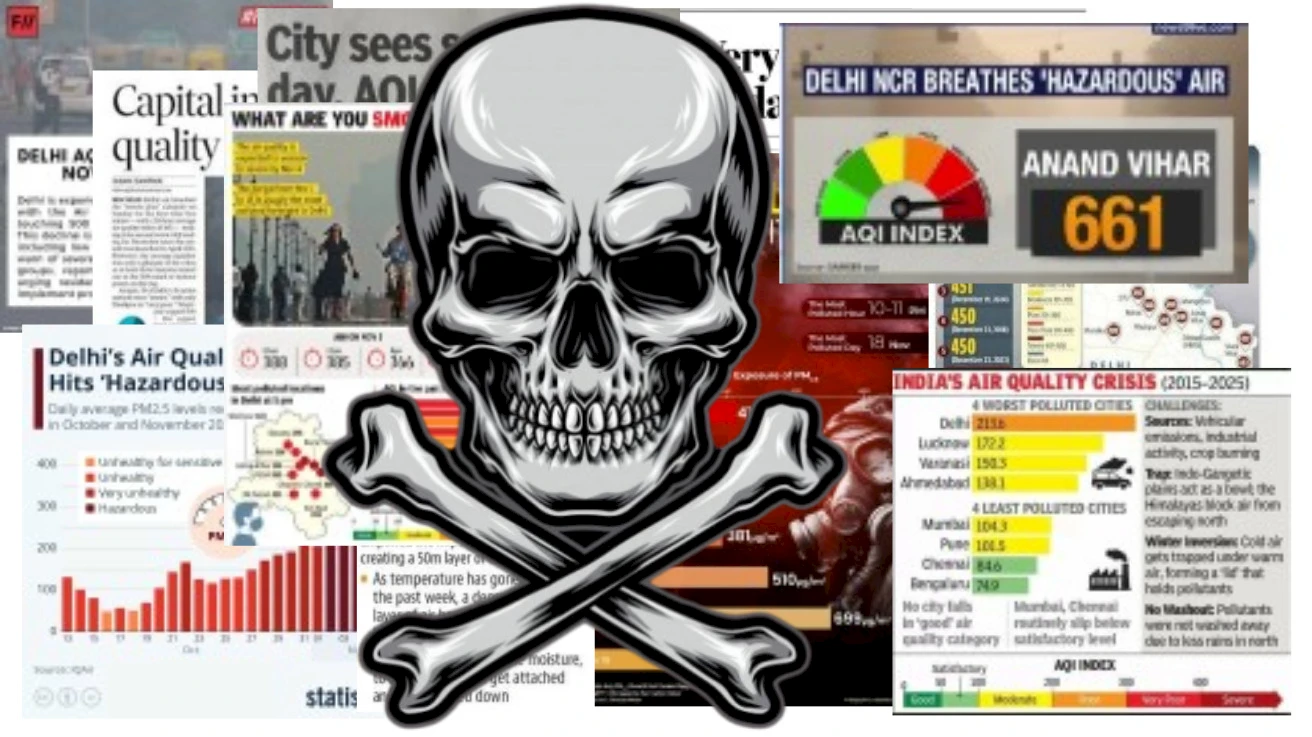
Every winter, Delhi-NCR's air becomes a public-health concern measured in numbers. The sky takes on a familiar grey haze, and we begin checking our phone screens for the AQI—quietly relieved when the number drops from “hazardous” to merely “very poor,” as if that were somehow good news.
But the AQI tells us only about the air outside. It cannot tell us what happens once that air enters the body.
Air pollution is among the world's leading environmental health risks. Fine particulate matter, known as PM2.5, is one of the pollutants of greatest concern — unlike the larger dust particles the nose and throat can trap, PM2.5 particles are small enough to penetrate deep into the lungs and some particles or their components can enter the bloodstream. This is why PM2.5 is so strongly linked to respiratory and cardiovascular disease.
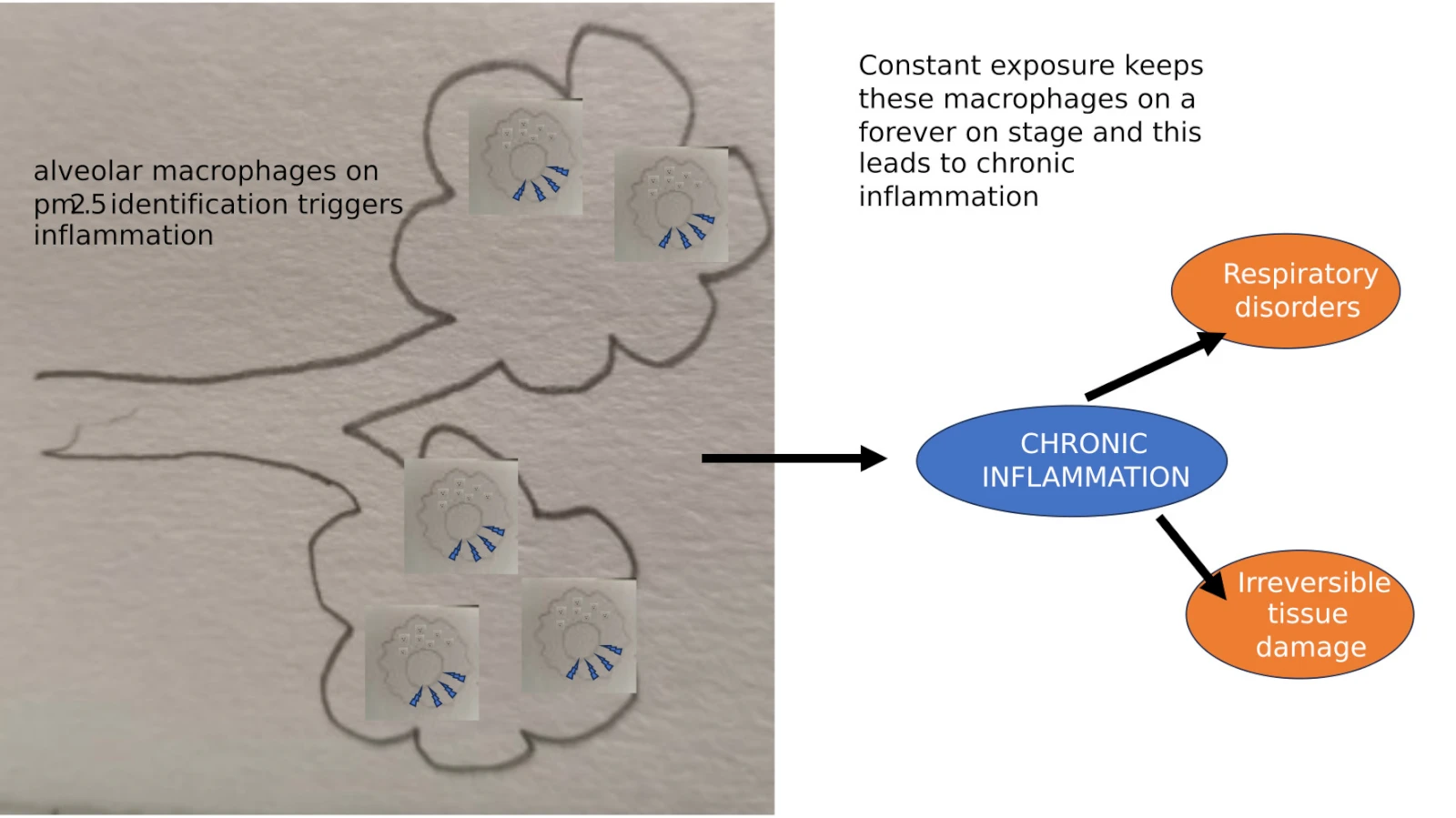
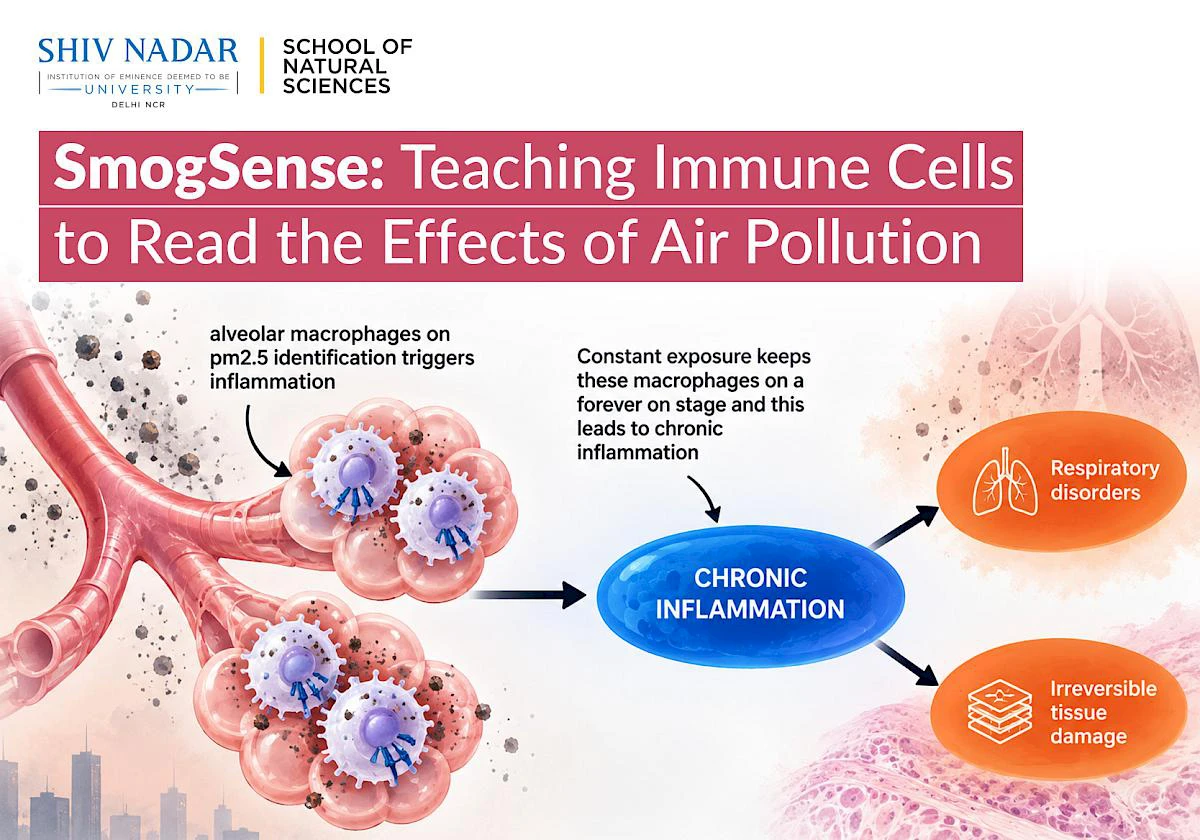
A macrophage encountering PM2.5 activates a protein called NF-κB, the master switch that turns on inflammatory genes. A short burst is normal — even useful, a sign the body's defenses are working. But when exposure is constant, as it is for anyone breathing Delhi's winter air day after day, NF-κB stays switched on. The result is chronic inflammation that gradually damages lung tissue in ways that don't reverse
The same air does not necessarily produce the same biological response in everyone. Age, underlying disease, and the duration and intensity of exposure can all shape what happens next. That's why the same smog can hit two people so differently. One gets a cough that clears on its own. The other gets a cough that won't go away without medical help. That's the question our students on the SmogSense team set out to answer: what if we could study the biological response to pollution at the level of the cell?
SmogSense, an iGEM 2026 project from our student team at Shiv Nadar Institution of Eminence, is developing an engineered macrophage system that can report — and potentially respond to — the inflammatory signaling PM2.5 triggers.
Why Delhi—and why now?
Delhi-NCR provides an immediate context for the question SmogSense is asking. According to IQAir's 2025 World Air Quality Report, New Delhi was ranked the world's most polluted capital city for the eighth consecutive year, with an annual average PM2.5 concentration of 82.2 µg/m³ — over 16 times the World Health Organization's guideline level of 5 µg/m³.
This is not simply a bad-air day; it reflects a sustained burden of particulate pollution over the year. And the health burden extends far beyond temporary breathing discomfort — research has also associated long-term PM2.5 exposure with increased mortality in Delhi. That makes Delhi a setting where the question of what polluted air does to the body is particularly urgent.
Professor Sanjeev Galande, Dean, School of Natural Sciences and Project Advisor, explains:
"Air pollution is usually discussed as an environmental problem, but its consequences are ultimately biological. SmogSense brings those two perspectives together — using synthetic biology to make that biological response visible and measurable."
Macrophages are immune cells found throughout the lungs, where they help clear inhaled particles, microbes and cellular debris. They also participate in the body's inflammatory response to particulate matter. Research in macrophages has linked PM2.5 exposure to activation of the NF-κB pathway, an important regulator of inflammatory gene expression.
PM2.5 itself is not a single substance. Its chemical composition varies depending on where it comes from, and particles can carry different metals, organic compounds and other components. These can interact with cells and contribute to oxidative stress and inflammatory signalling.
Dr Jugal Das, Assistant Professor, Department of Life Sciences and Primary PI of the project, explains:
“Air-quality measurements tell us about exposure, but they do not capture the biological response that exposure produces. With SmogSense, we are asking whether we can build a cellular system that converts an inflammatory response into a measurable signal. That gives us a way to study the effects of particulate pollution directly at the cellular level.”
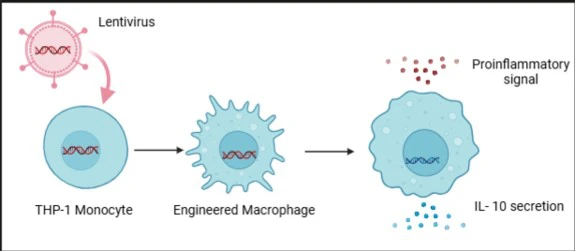
SmogSense is an engineered macrophage biosensor designed to report particulate exposure-associated inflammatory signalling. The team is developing an NF-κB-responsive genetic circuit, packaging it into lentiviral particles using HEK293 cells, and introducing it into THP-1-derived macrophages.
A cell that reports—and responds
The SmogSense team is developing a synthetic genetic circuit that responds to NF-κB activity. To build this, the team is packaging the circuit into lentiviral particles — a common lab tool for delivering genetic material into cells. From there, the circuit is delivered into THP-1-derived macrophages, lab-grown immune cells commonly used as a model for human macrophages, including those in the lungs.
When the pathway is activated, the circuit is designed to produce a fluorescent reporter. Researchers can then measure that signal to study how the engineered cells respond under different experimental conditions.
The SmogSense circuit is also being designed to produce interleukin-10 (IL-10), an anti-inflammatory cytokine that helps regulate immune responses. Studies in human alveolar macrophages have shown that IL-10 can suppress inflammatory cytokine production and influence NF-κB activity. In SmogSense, this biology is incorporated into a synthetic circuit: the inflammatory signal that activates the fluorescent reporter is also designed to trigger an anti-inflammatory output.
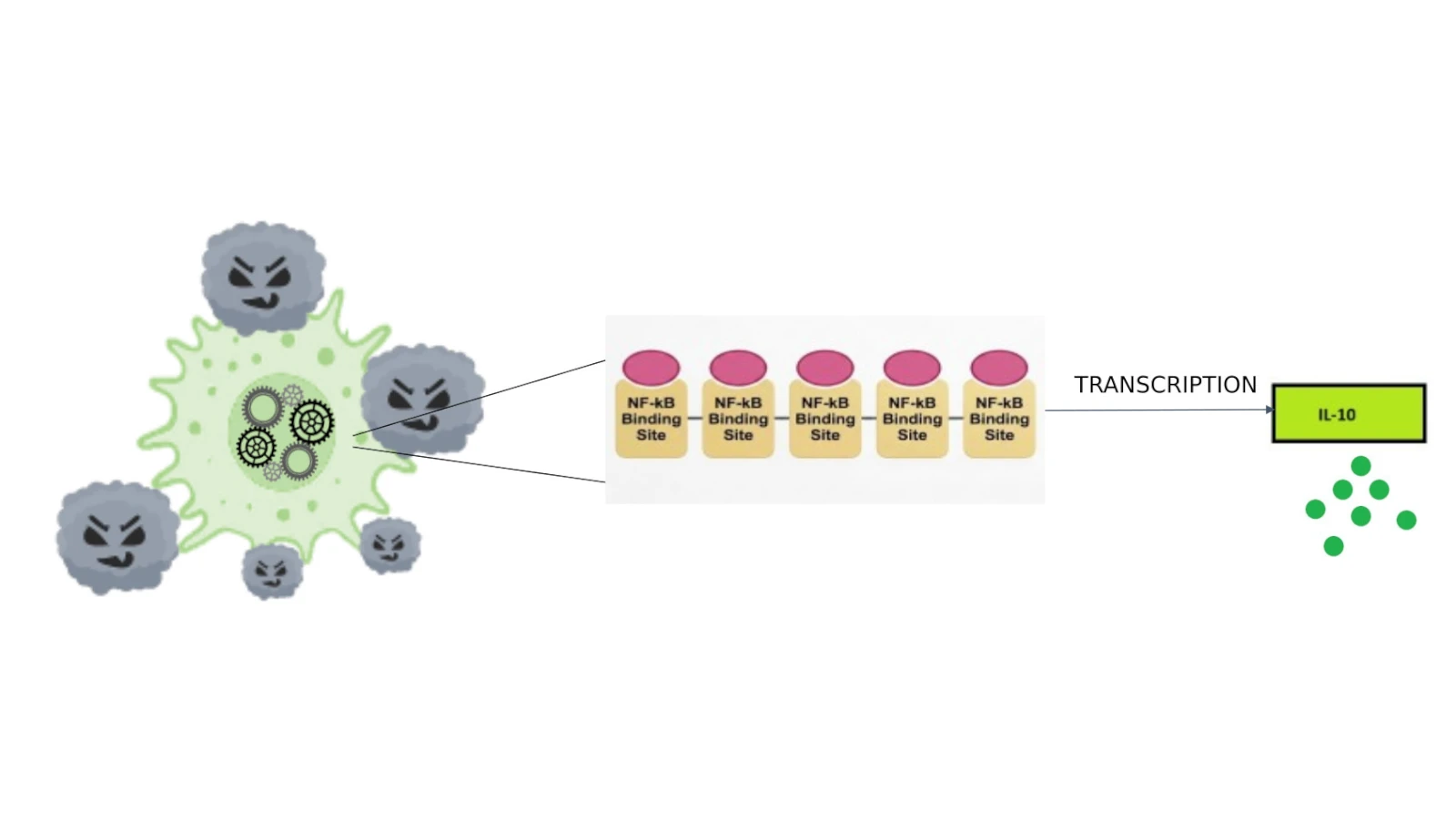
Synthetic genetic circuit in THP-1-derived macrophages — When particulate exposure activates NF-κB in the engineered macrophages, the circuit is designed to produce IL-10 alongside a fluorescent reporter. This creates a potential negative-feedback mechanism in which inflammatory signalling could trigger an anti-inflammatory response.
The concept is a form of negative feedback—detect an inflammatory signal and produce a molecule that may help restrain the response.
Professor Sanjeev Galande says:
"What makes SmogSense particularly interesting is that it brings together sensing and response in the same biological system. We are not simply trying to build a sensor for pollution — we are exploring whether engineered cells can recognize a harmful biological response and act on it in a controlled way."
SmogSense is currently a proof of concept in cultured cells, not a therapeutic product. The team will establish whether the circuit behaves as intended, how specific and reproducible its response is, and whether its anti-inflammatory output can meaningfully regulate the cellular response without unwanted effects.
The immediate objective is focused: build and validate the circuit, and test whether it can produce a controlled anti-inflammatory output alongside its measurable signal. If that holds up, the same system could become a research platform for studying how particulate exposure drives inflammation, and for screening compounds that influence that response.
Dr Jugal Das says:
"At this stage, our priority is to establish the biology rigorously. If we can demonstrate that the circuit responds predictably to inflammatory signals and that its outputs can be controlled, we will have a foundation on which more sophisticated applications can be built."
The Road Ahead
The team will take SmogSense to the iGEM 2026 Grand Jamboree in Paris this November, where student teams from around the world will present their synthetic-biology projects. The competition brings together laboratory research with modelling, human practices, safety and responsible innovation.
The SmogSense core team comprises Aayushi Dasgupta, Rucha Shobhane, Annushka Dogra, Shubhika Pandey and Aarav Lall.
Project at a glance
Project: SmogSense
Institution: Shiv Nadar Institution of Eminence
Competition: iGEM 2026
Category: Therapeutics Village
Grand Jamboree: Paris, November 2026
Core Team: Aayushi Dasgupta, Rucha Shobane, Annushka Dogra, Shubhika Pandey and Aarav Lall
Faculty Contact Emails:
Dr. Jugal Das ([email protected]): Primary PI
Prof. Sanjeev Galande ([email protected]): Advisor
SNIoE Team Page(Project Overview): https://teams.igem.org/6519
Email id- [email protected]
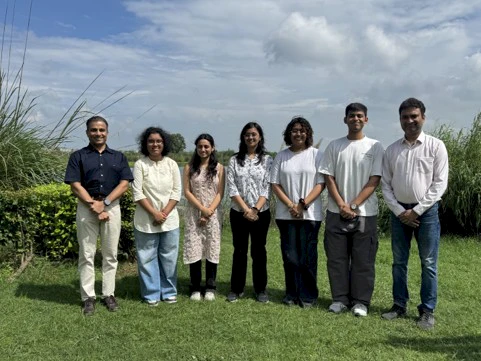
The SmogSense Team — From left to right: Professor Sanjeev Galande, Aayushi Dasgupta (4th-year Biotechnology), Rucha Shobhane (3rd-year Biotechnology), Annushka Dogra (4th-year Biotechnology), Shubhika Pandey (4th-year Biotechnology), Aarav Lall (4th-year Biotechnology), and Dr Jugal Das.
Supporting the next step…
Supporting SmogSense means supporting the experimental work behind the idea: validating the genetic circuit, characterising its behaviour and helping a student team take an ambitious synthetic-biology concept from design towards evidence. It is an opportunity to invest in young researchers working at the intersection of synthetic biology, environmental health and immune biology.
Srijita Banerjee,
Academic Associate,
School of Natural Sciences.
More Blogs

The Hawthornden Literary Retreat bestowed on Dr Sambudha Sen to complete the manuscript of a novel
Professor Sambudha Sen, Head of the Department of English at Shiv Nadar Institution of Eminence, Delhi-NCR, was awarded a residency at the...
The Power of the Moving Body
Movement is an innate bodily action that humans have been exhibiting for the longest time. Long before language was invented, the body was the...

How Does A Multi-Disciplinary Approach To Education Enhance Learning And Prepare Students For A Multi-Faceted World?
In today’s world, where businesses are changing almost every day, it is the responsibility of educational institutes to provide holistic...