What Delhi-NCR's Smog Does Inside Your Lungs
Editorial / March 31, 2026
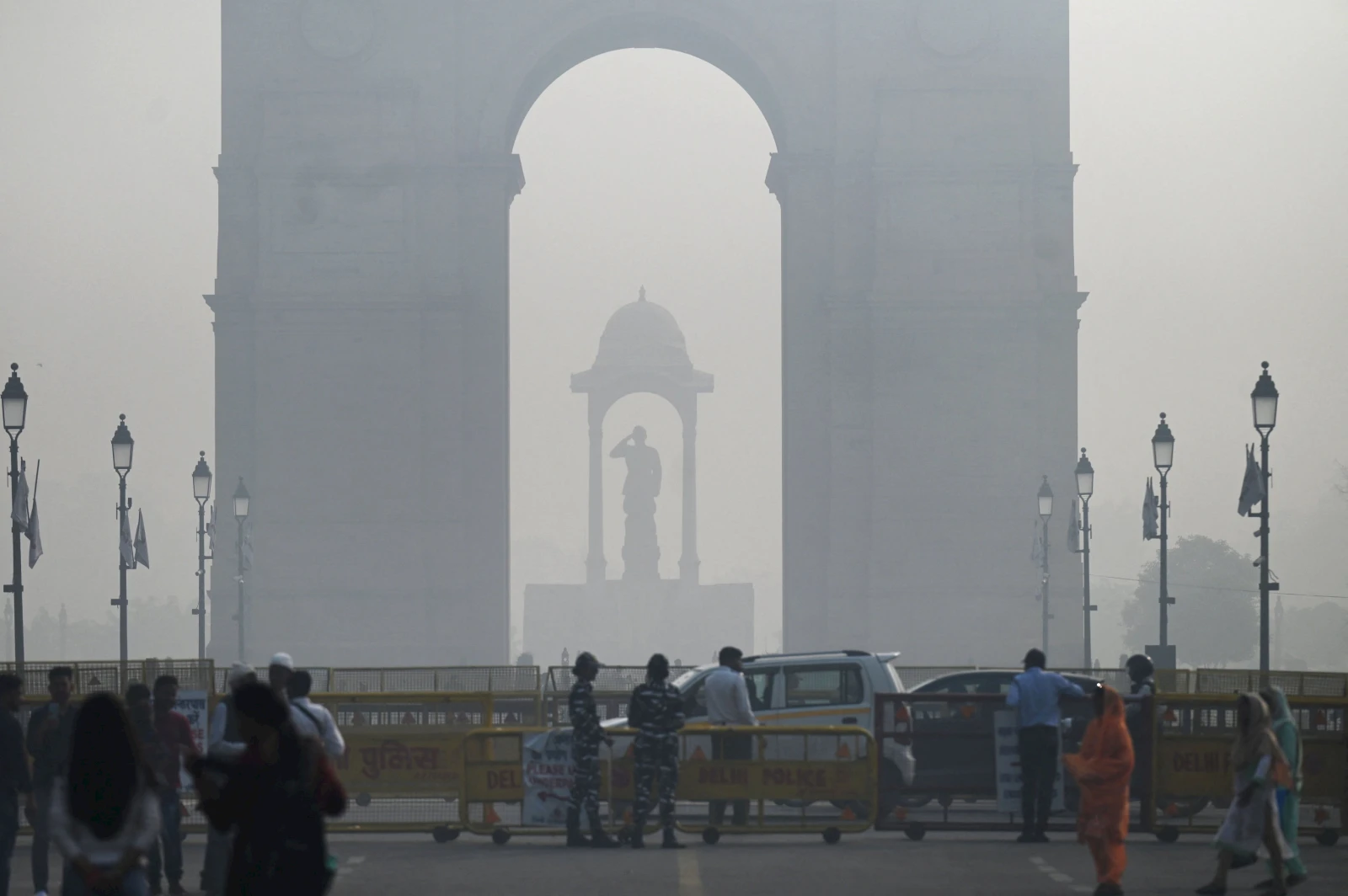
Every winter, the script remains the same. The air quality in Delhi-NCR turns foul, and the blame game begins. Emergency measures are announced, the sale of air purifiers soars, people fall ill, schools shift to online mode, anchors on TV channels cry themselves hoarse, newspapers begin the blame game, and then, predictably, everything resets. Except the air does not.
More than 20 million people continue to breathe air with pollution levels that rarely meet safe standards. For many, especially those who work outdoors or live without sealed interiors or air purifiers, there is no real escape. Exposure is not occasional. It is constant.
What tends to get lost in this annual churn is a more intimate question. Not what is in the air, but what happens after it is inhaled.
A study by Professor Sailesh N. Behera and research scholar Mudit Yadav pushes the inquiry inside the body. It traces how pollutants move through the respiratory system, how they transform, and where they ultimately settle.
The research is built on high-resolution observations from four sites across Delhi-NCR between September and December 2023. The timing is deliberate. It captures the transition from post-monsoon conditions, when pollutant dispersion is relatively efficient, to the winter period, when atmospheric stability begins to dominate.
The dataset itself is layered. Continuous monitoring of particulate matter distinguishes between PM2.5 and PM10, allowing the researchers to track not just concentration but particle size distribution. Alongside this, gaseous pollutants, including nitrogen dioxide, sulphur dioxide, ammonia, ozone, and carbon monoxide, are measured to map the chemical environment in which particles form and evolve.
Meteorological inputs add another dimension. Wind speed and direction help explain transport pathways. Temperature and humidity shape chemical reactions and influence how long pollutants remain suspended. These variables are not background context. They are active drivers.
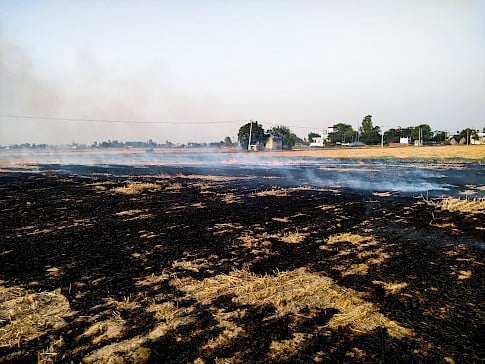
To extend the analysis beyond local conditions, the study integrates fire hotspot data with backward trajectory modelling. In practical terms, this means tracing air parcels arriving in Delhi back in time to identify their origins. During the haze period, these trajectories consistently point towards regions with active biomass burning.
The result is a coupled system rather than a single-source problem. Urban emissions provide a steady baseline. Vehicular exhaust, construction dust and industrial output remain present throughout the year. But as winter sets in, emissions from agricultural burning enter the system on a large scale. North-westerly winds transport these pollutants into Delhi, where low wind speeds and higher humidity reduce dispersion. The atmosphere, in effect, becomes a holding chamber.
The shift from non-haze to haze conditions is sharply reflected in the data. PM2.5 concentrations more than double across all sites. The ratio of PM2.5 to PM10 also increases, indicating a higher proportion of fine particles. This matters because fine particles are more likely to be formed through secondary processes, such as gas-to-particle conversion, and are more capable of penetrating deep into the lungs.
To disentangle the mix of sources, the researchers apply principal component analysis. This statistical approach identifies clusters of pollutants that tend to vary together, revealing underlying emission sources. One component is associated with crustal material such as road dust and construction activity. Another reflects combustion processes, including vehicular and industrial emissions. A third becomes prominent during haze episodes and aligns with biomass burning and secondary aerosol formation.
Yet the most significant contribution of the study lies in its connection of these atmospheric processes to human exposure. Using the International Commission on Radiological Protection model, the researchers estimate the respiratory deposition dose. This goes beyond ambient concentration and asks how much particulate matter is actually retained within the respiratory tract.
The model divides the respiratory system into three functional regions. The head airway captures particles in the nose and throat. The tracheobronchial region represents the branching airways leading into the lungs. The alveolar region, deep within the lungs, is where gas exchange occurs and where the body is most vulnerable.
Deposition depends on particle size, breathing patterns and activity level. Larger particles are more likely to be trapped in the upper airways through inertial impaction. Finer particles, particularly those in the PM2.5 range, can bypass these defence mechanisms and travel deeper into the lungs, reaching the alveoli by diffusion.
The findings show that nearly all PM2.5 particles present in the air are inhaled. Approximately 80 per cent of the deposit in the upper airways, while smaller fractions reach the tracheobronchial and alveolar regions. Although the proportion reaching the deepest part of the lungs is lower, its health significance is disproportionately high due to the alveolar tissue's sensitivity and its direct interface with the bloodstream.
The study also incorporates activity-based exposure scenarios. By modelling conditions such as sitting, walking and exercising, it demonstrates how respiratory deposition scales with breathing rate. During physical activity, increased ventilation increases pollutant intake and deeper penetration. Exposure, therefore, is dynamic. It changes not just with environment, but with behaviour.
Across all sites, the transition to haze conditions produces a marked increase in deposition dose. When translated into health risk, the study estimates an overall rise of around 130 per cent. This reflects both elevated pollutant concentrations and enhanced deposition efficiency under winter conditions.
Spatial differences remain evident. Delhi records the highest levels of pollutants, followed by Gurugram, Greater Noida, and Ghaziabad. However, the pattern of increase is consistent across the region, reinforcing the idea that this is not an isolated urban problem but a regional atmospheric system. These findings sit within a broader pattern observed through 2025 and early 2026, in which repeated episodes of severe pollution have been recorded, with only short-lived improvements. The mechanisms identified in the study continue to operate with little structural change.
What this research ultimately does is narrow the gap between the environment and the body. Air pollution is often framed as an external metric, something measured in micrograms per cubic metre. But those numbers do not stay outside. They are taken up by particles that enter the respiratory system, distributed across its regions, and, in many cases, remain there. In Delhi-NCR, the crisis is no longer just about the air we measure. It is about the air that the body cannot get rid of.
More Blogs

The Hawthornden Literary Retreat bestowed on Dr Sambudha Sen to complete the manuscript of a novel
Professor Sambudha Sen, Head of the Department of English at Shiv Nadar Institution of Eminence, Delhi-NCR, was awarded a residency at the...
The Power of the Moving Body
Movement is an innate bodily action that humans have been exhibiting for the longest time. Long before language was invented, the body was the...

How Does A Multi-Disciplinary Approach To Education Enhance Learning And Prepare Students For A Multi-Faceted World?
In today’s world, where businesses are changing almost every day, it is the responsibility of educational institutes to provide holistic...