The Science That Could Save India's Harvest
Editorial / March 27, 2026
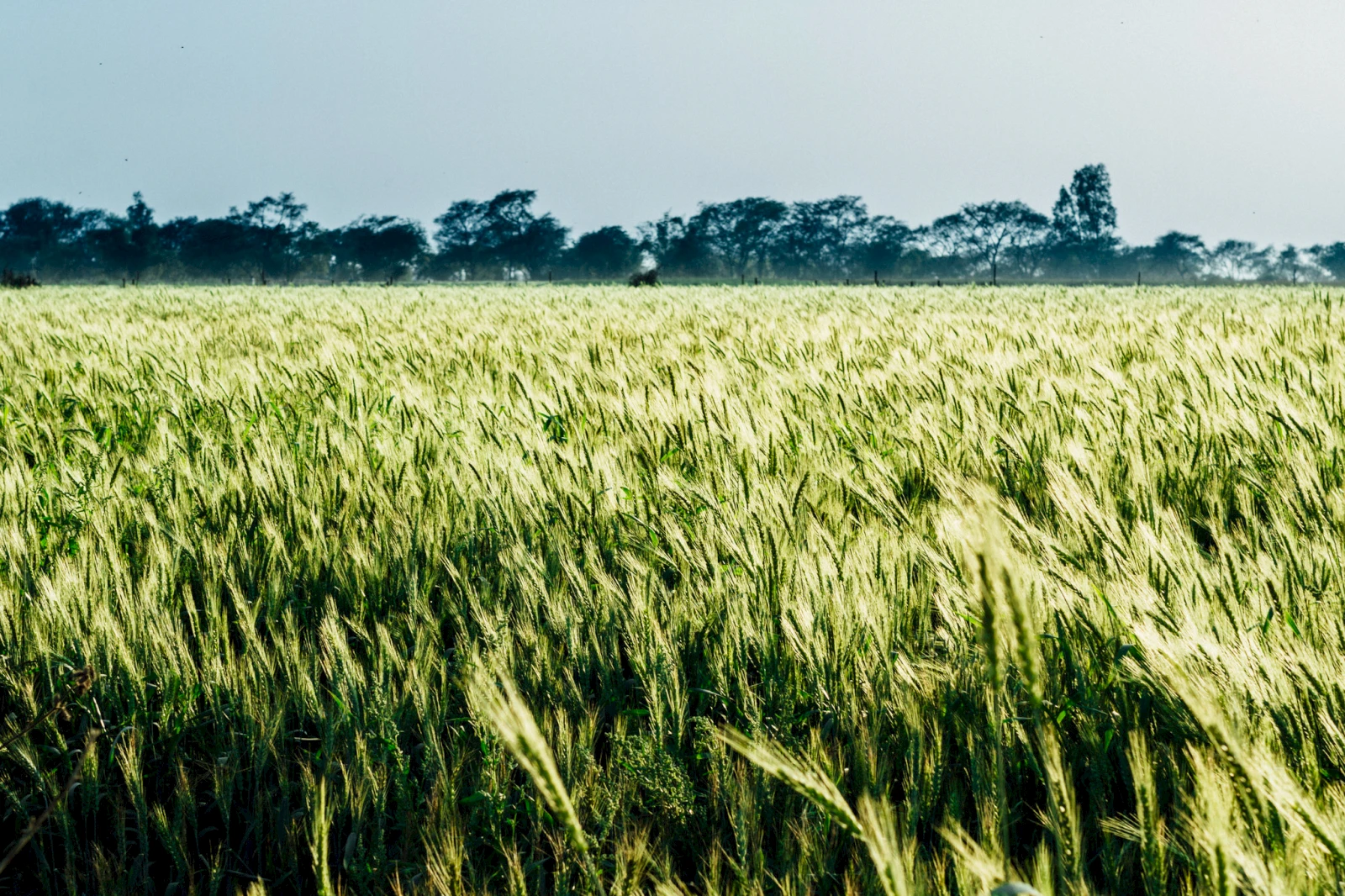
In India, wheat is more than a crop—it is a lifeline. It feeds hundreds of millions, anchors the public distribution system, and steadies food prices in a country where agricultural shocks can ripple quickly through the economy.
As Jawaharlal Nehru famously said, "Everything can wait, but not agriculture." That urgency has only deepened.
India, the world's second-largest wheat producer, harvested over 110 million tonnes in the 2024–2025 season. Yet this abundance is increasingly fragile, threatened by falling groundwater tables, erratic rainfall and intensifying heatwaves that strike just when crops are most vulnerable.
Plants sweat—but not in the way we do. On a cool morning in a wheat field, a healthy plant is quietly air-conditioning itself, releasing tiny bursts of moisture through its leaves to stay cooler than the surrounding air. It is an elegant, invisible system—until it begins to fail. As water becomes scarce, the plant begins to shut down this cooling mechanism. Its leaves warm, almost imperceptibly at first. That subtle temperature rise is not random; it is a signal of stress, a biological alarm bell. And for the first time, scientists are learning how to read that signal—and use it to guide how we grow food.
At its heart, the research suggests a subtle but profound shift. Irrigation need not be a rigid schedule imposed on crops. It can be a dialogue. Plants are already communicating their needs through temperature, broadcasting signals that we are only just beginning to interpret. The challenge—and opportunity—is to listen.
At the centre of this shift is a deceptively simple idea: if you can measure how hot a plant is, you can tell how thirsty it is. Researchers Dr. Gopal Das Singhal, Dr. Hitesh Upreti and Aditi Yadav at the Department of Civil Engineering have turned this insight into a practical tool known as the Crop Water Stress Index, or CWSI.
By comparing canopy temperature with air temperature and humidity, they produce a value between 0 and 1. A cool, well-watered plant sits near zero. A stressed, overheated plant moves closer to one. What was once guesswork becomes quantifiable.
To test the idea, the team conducted field experiments on winter wheat over two growing seasons in western Uttar Pradesh. They compared different irrigation methods—drip, flood, and rain-fed—while varying the amount of water applied and the timing. Instead of watering crops on fixed schedules, they used soil moisture thresholds, allowing controlled dryness before irrigating. The approach mimics a shift from routine to responsiveness.
The results are striking. The highest yields did not come from fields that received the most water, but from those that used water most intelligently. Drip irrigation, particularly when applied at moderate deficit levels, consistently produced better grain yields and higher water-use efficiency than traditional flood irrigation. In contrast, fields irrigated according to fixed farmer practices showed wide swings in plant stress, leading to less predictable outcomes.
Even more revealing is the role of timing. Wheat plants are not equally sensitive to water stress throughout their life cycle. The study shows that the flowering and post-heading stages are critical. Stress during these windows has an outsized impact on final grain yield, reducing both quantity and quality. Earlier stages are more forgiving, meaning water can be conserved without harming the crop—if irrigation is carefully timed. In other words, it is not just how much water is applied, but when.
This insight carries enormous implications for India's agricultural heartland, particularly the Indo-Gangetic plains, where wheat dominates, and groundwater is under severe pressure. Many farmers still rely on fixed irrigation cycles, watering every few weeks regardless of the crop's actual needs. The result is a paradox: overuse of water alongside uneven crop performance. A system that listens directly to plant signals offers a way out of this inefficiency.
There is also a climate dimension that makes the findings even more urgent. Heatwaves in north India have become more frequent and intense, often coinciding with the grain-filling stage of wheat. A few days of extreme heat at the wrong moment can sharply reduce yields. By monitoring crop stress in real time, tools like CWSI could allow farmers to respond dynamically, applying water when it matters most and potentially buffering crops against climatic shocks.
What makes this approach particularly promising is its accessibility. Measuring canopy temperature does not require complex or invasive technology. Infrared thermometers can do the job, and the same principle can be scaled up using drones or satellites to monitor entire fields. With proper calibration, this could become a cornerstone of precision agriculture.
In a future where water is scarce and demand for food continues to rise, that shift from intuition to information could redefine farming. India's wheat fields may hold the answer not in more water, but in smarter use of it. And in that quiet thermal language of crops lies a powerful new way to secure the harvests of tomorrow.
More Blogs

The Hawthornden Literary Retreat bestowed on Dr Sambudha Sen to complete the manuscript of a novel
Professor Sambudha Sen, Head of the Department of English at Shiv Nadar Institution of Eminence, Delhi-NCR, was awarded a residency at the...
The Power of the Moving Body
Movement is an innate bodily action that humans have been exhibiting for the longest time. Long before language was invented, the body was the...

How Does A Multi-Disciplinary Approach To Education Enhance Learning And Prepare Students For A Multi-Faceted World?
In today’s world, where businesses are changing almost every day, it is the responsibility of educational institutes to provide holistic...