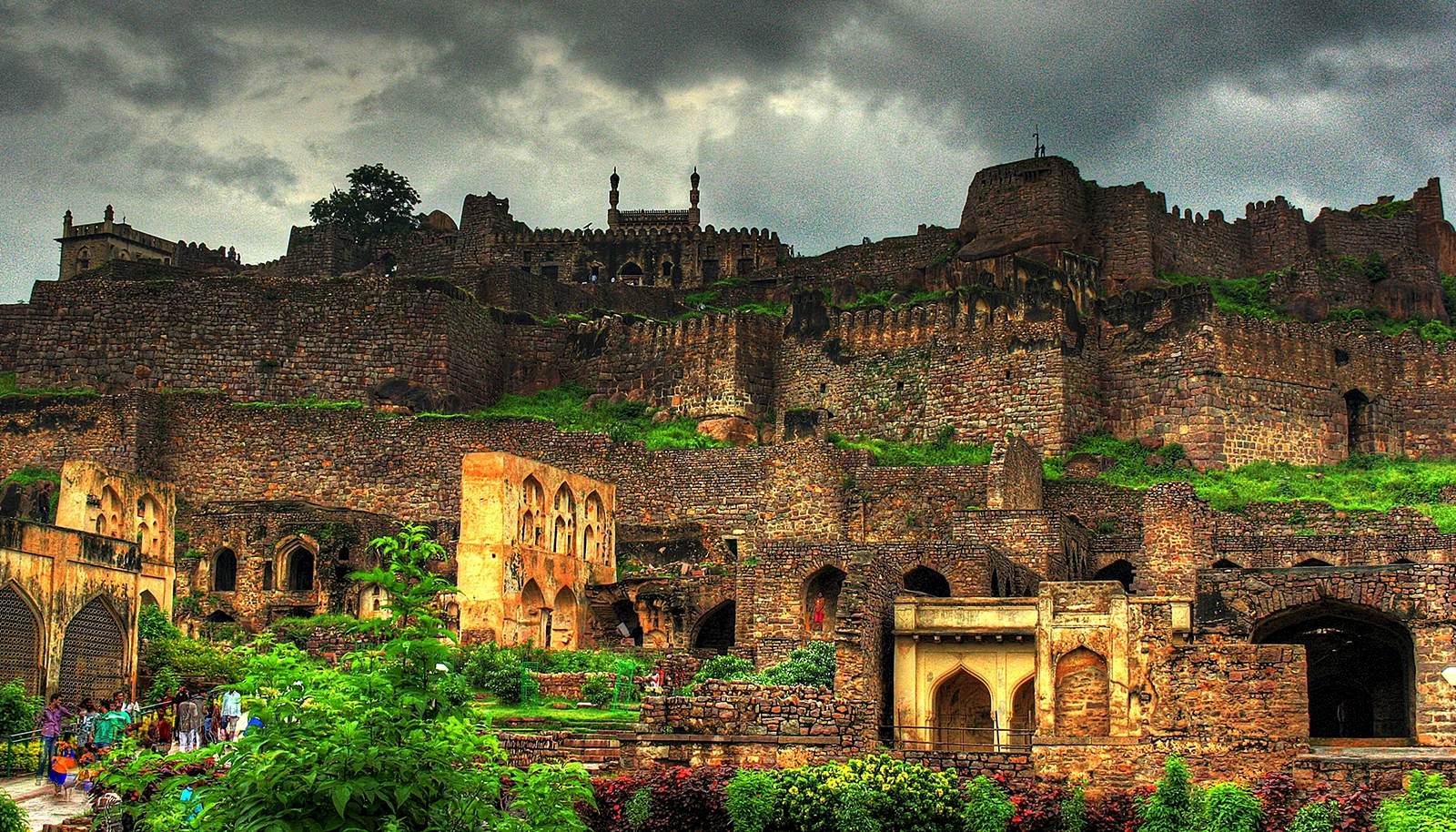
The breathing walls of Golconda Fort
Editorial / February 23, 2026
Tourists at Golconda Fort encounter two kinds of guides. The first carries official credentials, facts, and a script. The second "unofficial guides" may lack an official I-card, yet, they may change how you understand heritage and history.
This is the fascinating world uncovered by Mahammad Ali Jauhar, a Ph.D scholar at Shiv Nadar University's Department of Sociology, along with his collaborator Eda Kandiyil Ahmad Faseeh from the University of Hyderabad. Their research, recently published in the international journal Religion, makes a deep dive into Golconda Fort as a witness to a quiet revolution in how history gets told.
Local Muslim men whose families have lived in Golconda's neighborhoods for generations operate here as unofficial guides. They don't just work at the fort; they inhabit it. And that difference, Jauhar's research reveals, is everything.
The official Archaeological Survey of India promotes guides who've passed tests on history and archaeology. Their authority comes from books, archives, and documented facts. But the unofficial guides draw from "situational knowledge." Their stories are not borrowed from libraries but are learnt from a lifetime of walking these stones.
These storytellers don't just recite history; they perform a carefully choreographed encounter of deep connection. As one climbs the steep paths, they offer a steadying hand. In the shadowed passages, they share a joke. Between monuments, they ask about your life, your family, your struggles.
The storytelling shifts if trust develops, if they sense genuine openness. Public tales (kahani) give way to sacred narratives. They call these dil ki kahani (stories of the heart).
"These are not for casual telling," one guide explained to the researchers. These are the suppressed histories, the tales that many don't acknowledge. Sufi saints whose blessings helped emperors, miracles that defy archival documentation, and spiritual presences that still inhabit these ruins.
Deep within the fort's restricted zones lies a Sufi shrine—the dargah of Hazrat Baba Siddi Shah. The path is narrow, overgrown, and known for snakes. Security guards patrol constantly. Yet the faithful still visit. The contrast is stark. Golconda's six grand mosques have been rendered "dead", frozen in time like museum exhibits. But this small, faded shrine? It remains vibrantly alive. Prayer mats lie ready. The Quran sits open. Devotional rituals continue.
How? Through what Jauhar calls "affective storytelling" leading to "resacralisation." The guides don't just describe the shrine; they facilitate access to it, reclaiming these stones for lived spirituality.
The research exposes a troubling irony at the heart of India's heritage management. The state's attempt to keep monuments "secular" and "neutral" has instead created a spiritual hierarchy. The storytellers resist this quietly but persistently.
Jauhar's work reveals how marginalised communities negotiate power, how history gets contested in everyday encounters, and how heritage sites become battlegrounds for identity and belonging.
In the hands of unofficial guides, Golconda Fort becomes more than a tourist attraction or protected monument. It transforms into what it has always been for them: home, heritage, and hallowed ground—all at once, and against all odds.
More Blogs

The Hawthornden Literary Retreat bestowed on Dr Sambudha Sen to complete the manuscript of a novel
Professor Sambudha Sen, Head of the Department of English at Shiv Nadar Institution of Eminence, Delhi-NCR, was awarded a residency at the...
The Power of the Moving Body
Movement is an innate bodily action that humans have been exhibiting for the longest time. Long before language was invented, the body was the...

How Does A Multi-Disciplinary Approach To Education Enhance Learning And Prepare Students For A Multi-Faceted World?
In today’s world, where businesses are changing almost every day, it is the responsibility of educational institutes to provide holistic...