CRISPR, mRNA, and Gene Therapy - Why Now is the Perfect Time to Pursue a Biotechnology Course
Blog / April 23, 2026
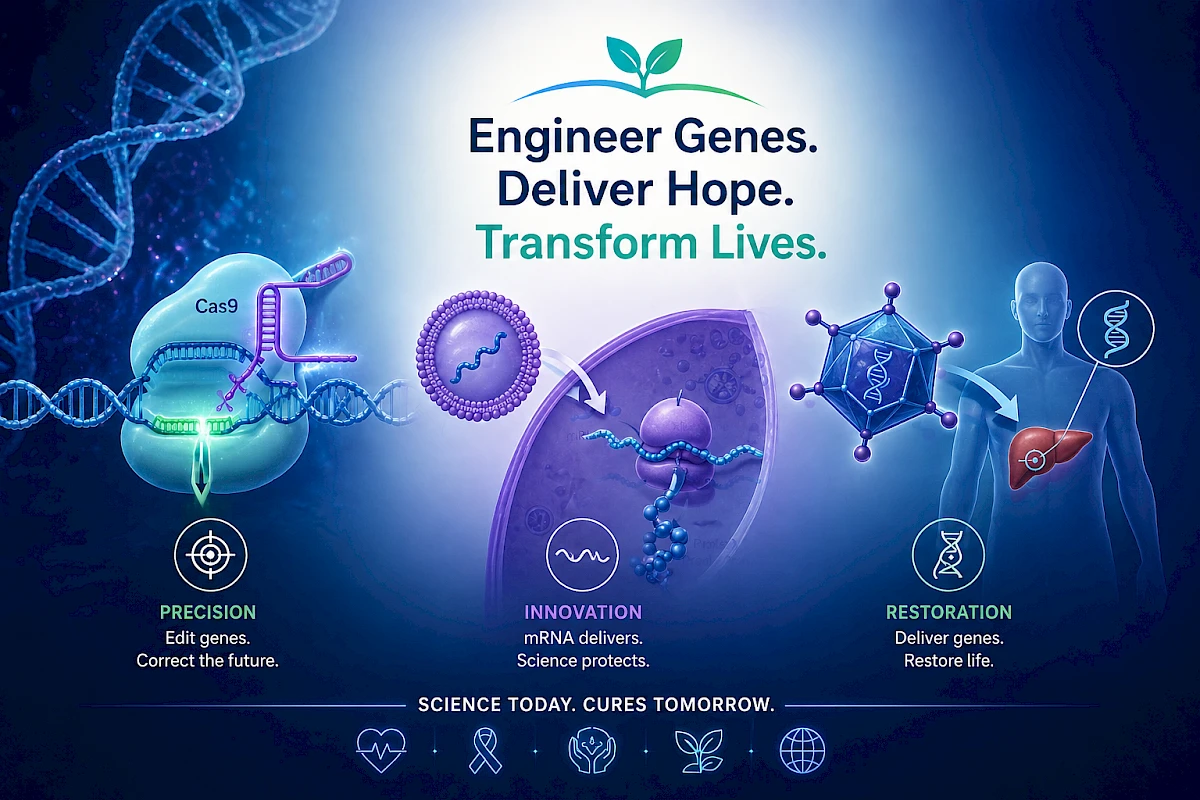
Here's something worth sitting with- a technology that scientists spent 30 years theorizing about in journals quietly became a routine part of hospital treatment in under a decade. That's what happened with CRISPR. And while that was going on, mRNA vaccines, once considered too fragile and experimental for mass deployment, ended up being administered to billions of people across the world in record time. Neither of these things was supposed to happen this fast.
What's changed is not just the science. The bigger shift is that biotechnology has stopped being a purely academic exercise and started functioning like an actual industry, one with supply chains, manufacturing standards, and a serious talent gap that universities are scrambling to fill. Students picking a career direction right now are stepping into that gap, which is a genuinely rare position to be in.
What Does a Biotechnology Course Include in Today’s Industry?
The white coat and microscope image of a biologist is not wrong exactly, but it's about 30 years out of date. Today's biotechnologists are as likely to be running computational models or designing synthetic metabolic pathways as they are to be pipetting samples. The field has sprawled well beyond medicine too.
The global bioscience sector generates around $3.2 trillion in economic output each year, and that number includes everything from bio-based plastics replacing petrochemicals to engineered crops feeding drought-prone regions. A serious biotechnology program today covers-
- Genomics and Proteomics- mapping genes and proteins to understand what drives disease at the molecular level
- Drug Discovery and Personalized Medicine- building treatments around a patient's specific genetic makeup rather than population averages
- Industrial and Plant Biotechnology- replacing synthetic chemicals with biological alternatives and improving agricultural resilience
- Neuroscience and Ecology- using bioengineering to study brain function and tackle environmental problems like soil contamination
Why is Biotechnology Growing So Fast? Key Trends, AI, and Market Size
Timing matters in any career, and the timing here is hard to ignore. DNA sequencing costs have dropped so steeply over the past decade that research that once required a major university budget can now be done in a mid-sized startup. That alone would be enough to reshape the industry.
Add to that the way machine learning has started integrating into experimental biology, with AI models predicting gene behavior before lab work even begins, and you have a sector that is genuinely accelerating rather than just growing steadily.
Growth Driver | What It Means | Scale |
Market Expansion | CAGR of 20.6% to 28.63% | Approx. Rs. 1.5 Lakh Crore globally |
AI Integration | ML used for organism design and data analysis | Faster lab-to-clinic timelines |
Cost Democratization | Steep drop in DNA sequencing and synthesis costs | Broader access to genetic engineering |
What Are the Key Subjects and Skills in a Biotechnology Course?
One thing that separates a strong biotechnology program from a mediocre one is whether Bioinformatics is treated as a core subject or an elective. It should be core, full stop. Biological research now produces data at a scale that no one can interpret manually, and graduates who can't navigate computational analysis tools are working with one hand tied behind their backs. Beyond that, the best programs are built around three progressive levels-
Level | Core Topics | Skills Developed |
Basic Foundations | Cell Biology, Genetics, Microbiology, Biochemistry | Scientific fundamentals and lab technique |
Technical Proficiency | Bioinformatics, Recombinant DNA, High-throughput Screening | Metabolic engineering, cell-free synthesis |
Advanced Specialization | Cancer Biology, Drug Discovery, Systems Biology, Epigenetics | Independent research and discovery |
B.Sc. Biotechnology vs B.Sc. Research: Which is Better for Your Career?
Picking a degree program without paying attention to whether it has a research component is a mistake that costs students years in their career trajectory. A standard B.Sc. will get you the foundational knowledge. But 96% of biopharma executives, when surveyed, said they still cannot find enough candidates with the technical depth their organizations actually need. That gap exists largely because most undergraduate programs treat research as something that happens after graduation rather than something built into the degree itself.
There's also a straightforward financial argument. Biotechnology salaries run anywhere from 50% to 100% higher than comparable private-sector roles in most regions, and the highest-paying positions, the ones in Digital Biology, automated Biomanufacturing, and AI-integrated research, specifically require people who have already done real scientific work, not just studied it.
What Jobs Can You Get After a Biotechnology Course? Salary & Career Scope
The sector employs more than 2.3 million people directly, and hiring has not slowed down. Senior scientists in biotech hubs like Boston and San Diego are earning north of $120,700 a year, and India's own industry offers compensation that holds up well against other options for science graduates. What's worth noting is that the roles available span a genuinely wide range of working styles and interests-
- R&D and Discovery- driving early-stage research into next-generation biologics, synthetic vaccines, and newer frontiers like xenobiology
- Biomanufacturing and Quality Control- running GMP-compliant production facilities and optimizing continuous bioprocessing systems
- Data Science and Bioinformatics- connecting large biological datasets to therapeutic development, often in AI-driven or robotic lab environments
- Regulatory Affairs- navigating international drug approval processes and the increasingly complex ethical and legal landscape around biotechnology
Why Choose Shiv Nadar University (Institution of Eminence) to Pursue Biotechnology Course
Shiv Nadar University offers a new-age B.Sc. (Research) in Biotechnology, which focuses on hands-on learning from the beginning. Students start working on real research problems in their first year, which helps them learn how to think like scientists, not just study theory. They learn how to ask the right questions and understand why those questions matter.
Key highlights of the program-
- Research from Year One- Students gain real lab experience early, not just classroom knowledge.
- Interdisciplinary learning- The course combines biology, engineering, and data science. This reflects how modern biotechnology works in real life.
- Advanced lab facilities- The university has industry-level labs, including bioprocessing units, bioinformatics systems, and genome sequencing tools.
Because of this learning, students are job-ready by the time they graduate. They already know how to use the tools and solve the kinds of problems seen in biotech companies. This gives them an advantage over many other graduates.
Conclusion
Biotechnology is already making an impact today. It is being used in hospitals, agriculture, factories, and research labs. Students who study biotechnology now can work on important problems like genetic diseases, food security, and climate challenges. The field is growing fast, and new opportunities are constantly emerging. The demand for skilled professionals is backed by market trends, hiring data, and rapid industry growth. India’s growth in science and technology is already happening. The real question is whether you want to be part of it.
FAQs
- Is biotechnology a good career in 2026?
Yes, biotechnology is a high-growth career in 2026, driven by CRISPR, AI integration, and rising global demand for skilled professionals across healthcare, agriculture, and industrial sectors.
- What is the future scope of biotechnology?
Biotechnology has strong future scope, with applications in personalized medicine, sustainable agriculture, and bio-manufacturing, supported by rapid advancements in genomics, AI, and global investment.
- Is biotechnology in high demand globally?
Yes, biotechnology is in high demand globally due to talent shortages, expanding biopharma industries, and increasing reliance on AI-driven research, diagnostics, and large-scale biomanufacturing systems.
- What is the average salary after a biotechnology course?
Biotechnology graduates earn competitive salaries, often 50–100% higher than similar roles, with top positions in digital biology, AI research, and biomanufacturing offering significantly higher pay.
- How to become a biotechnologist after 12th?
To become a biotechnologist after 12th, pursue a B.Sc. in Biotechnology, focusing on genetics, bioinformatics, and lab experience for strong career readiness.