Bright Ideas, Everyday Problems
Leftovers on dining hall plates, queues for washing machines, and lights burning in empty classrooms are providing students of the School of Engineering at Shiv Nadar University, Delhi-NCR, with starting points for projects.
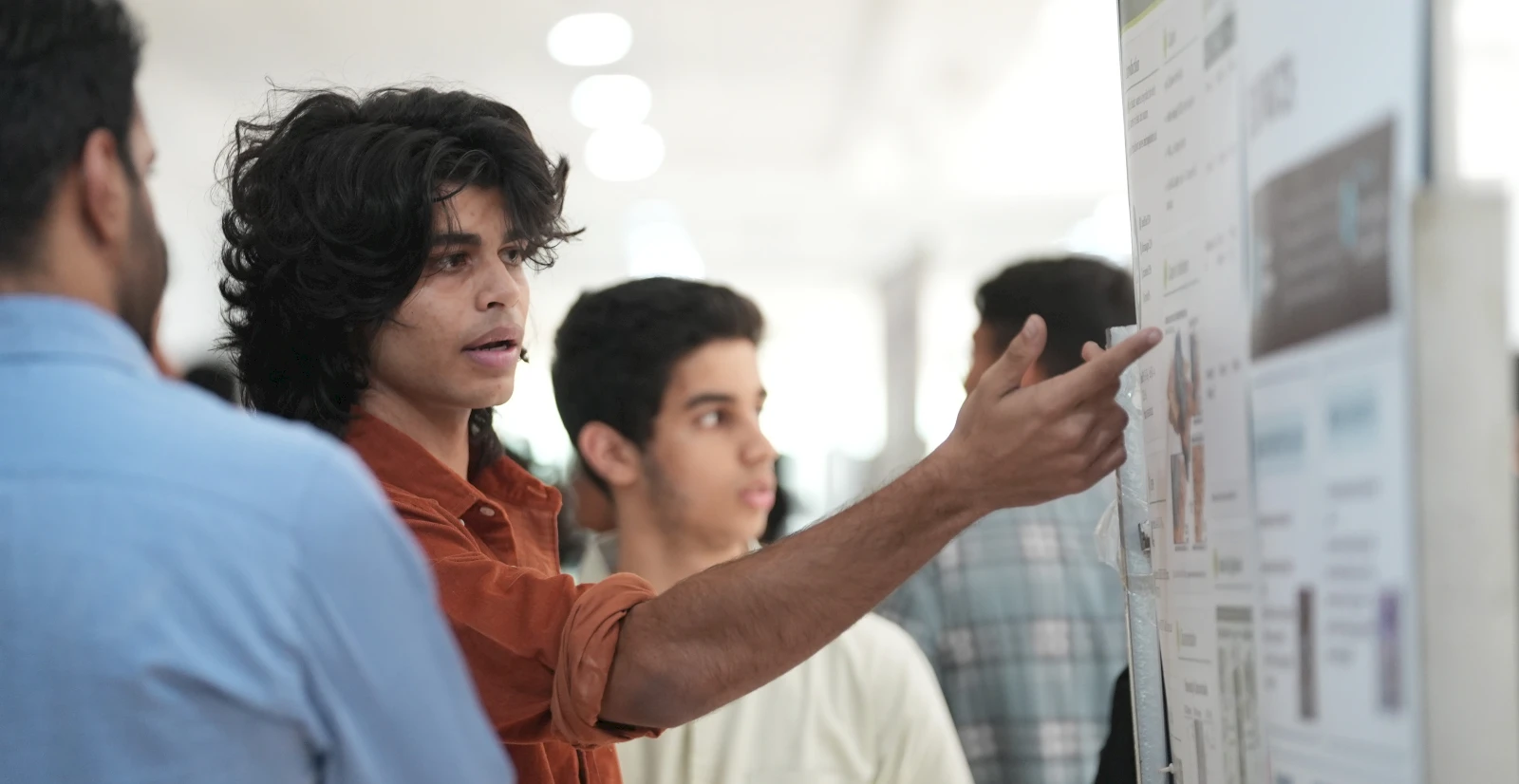
The over 90 projects span Computer Science and Engineering, Mechanical Engineering, Chemical Engineering, Civil Engineering and electrical disciplines. The poster presentations for the First-Year Engineering Project (FYEP) Poster Assessment, held on November 14, brought together work ranging from literature reviews and computer simulations to laboratory models and a demonstration of a working delivery robot.
Food waste is a recurring concern. Smart Mess Management from Arnav Garg, Arnav Khurana, Arnav Singh, Arnav Tyagi, Arpit Sarangi and Aryan Arora from the Department of Computer Science and Engineering proposes weighing plates returned with QR tags to create records that could help dining staff review portions and menus. The design includes feedback and rewards intended to encourage students to leave less food uneaten.
Other teams begin before cooking starts. Kartik Malhotra, Jeshnaa Garg, Jasmine Jain, Ishika Gupta, Kartikeya Misra and Kaathvi Sudarshan Meda’s SlotKitchen would allow students to reserve meals within fixed booking windows, generating consolidated orders for kitchen staff. Tamil, Suthan, Tanish, Surveen, Suniska, and Suryansh from the Department of Computer Science showcased Meal Minder, which supports advanced confirmations and cancellations, attendance records, and leftover tracking.
Shared facilities present another set of practical problems. Isha Divya Dubey, Hardik Singh, Harsh Krishn, Harshit, Harshit Raj, and Irfan Alam from the Department of Computer Science and Engineering showcased LaundroSync, which provides booking, availability, and reminder information for hostel washing machines. A separate laundry allocation project would monitor motor activity but require users to confirm that clothes have been removed before releasing a machine to the next person.
“Engineering education must develop technical fluency alongside judgment, empathy, and the ability to work with others. The First-Year Engineering Project Poster Assessment gives students an early opportunity to connect classroom learning with real problems and explain their ideas clearly. Presenting a project means thinking through whom it serves, why a particular approach makes sense, and what still needs to be tested. These habits matter from the first year. We want students to learn that a failed prototype can offer valuable evidence, and that understanding people’s needs is as important as understanding the technology used to address them,” says Professor Rajeev Kumar Singh, Dean, School of Engineering.
Transport projects include parking guidance, shuttle tracking, and bicycle monitoring. One shuttle prototype displays locations using simulated GPS data, with physical equipment planned for later development. CampusCycle would use Bluetooth signals and nearby receivers to record bicycles’ last-known locations and send movement alerts.
A Mechanical Engineering team reports a working demonstration of a delivery robot that follows marked lines and stops when it detects an obstacle ahead. Camera navigation and identification of delivery stations through radio-frequency tags remain proposed additions.
Beyond campus, CropGuard investigates whether leaf photographs combined with soil and weather information could improve assessments of crop health. Its software prototype uses public image datasets and simulated environmental readings. Trials with farmers and calibration for different soil conditions have not formed part of the demonstrated work.
Water management links several disciplines. A smart irrigation proposal combines soil-moisture measurements with weather forecasts to avoid watering before expected rainfall. Another design would reuse discarded plastic bottles as reservoirs, with sensors and a pump regulating water delivery.
Pedalspin takes a mechanical approach to muddy water. A bicycle-powered spinning bowl would separate silt before further filtration and treatment. The team plans a laboratory rig and measurements of turbidity, flow and chlorine levels. It does not claim the proposed system produces safe drinking water.
Flood safety is the focus of VARUNA, a remotely operated floating platform designed to measure water depth and detect possible electrical hazards. Intended for flood-prone areas of Delhi, the proposal includes a monitoring dashboard, risk mapping, and alerts for residents and government agencies.
Materials projects examine what happens to waste after it leaves a bin. One team proposes turning scraps from campus 3D printers into composite boards, then testing their density, bending response, and visible defects before considering applications.
Chemical Engineering students are exploring packaging films made from potato-peel starch and cellulose recovered from agricultural residues. The proposed use is dry, short-term packaging because moisture resistance remains a limitation. Another project would test fruit storage in crates containing ethylene-absorbing cartridges and color indicators made from red cabbage pigments.
Civil Engineering studies include permeable pavements, road-condition monitoring and bricks incorporating industrial or agricultural waste. The pavement proposal would allow rainwater to pass into a stone storage layer, with a local pilot recommended to assess its performance and maintenance needs.
Accessibility projects focus on specific obstacles. Smart assistive glasses would use sensors and directional vibrations to warn of hazards at head and chest height, supplementing a white cane. ModuRamp Access offers an adjustable boarding ramp with a rising handrail for train platform gaps, kneeling buses, and wheelchair-accessible vans.
Energy research ranges from footstep-powered floor tiles and small wind turbines to solar tracking and ocean-energy simulations. One solar-tracking proposal would compare a moving panel with a fixed equivalent, accounting for the electricity consumed by the tracking mechanism.
A classroom energy monitor mitigates the risk of leaving lights on while people remain inside. Its proposed combination of radar and infrared sensing would retain an occupied or uncertain status when readings conflict, including when students are sitting still.
Across the collection, progress will depend on the practical tests teams have outlined. These include repeated sensor trials, comparisons with existing systems, structural checks and fuller cost assessments. For the students, the next stage is to establish which designs can work reliably, what they require to maintain, and whether their benefits justify the equipment and effort involved.