How B.Tech. Computer Science Trains Innovators Who Redefine How the World Connects, Works, and Lives
Blog / October 05, 2025
B.Tech. Computer ScienceB.Tech. CSE SyllabusComputer Science B.Tech. syllabusJust think about the activities you have done in the last few hours.
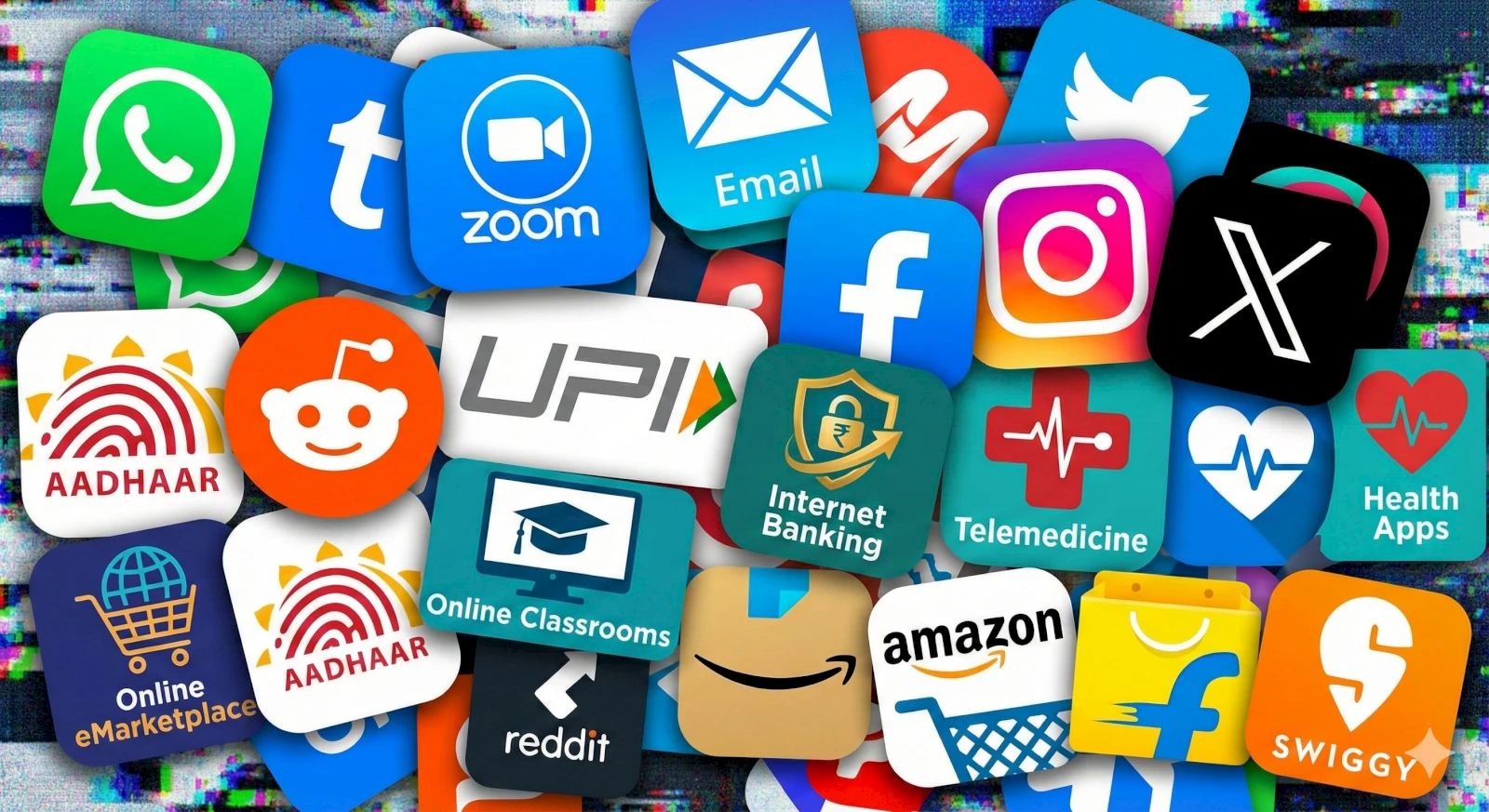
You must have sent messages, most probably streamed videos, used a digital payment, tracked a delivery, and maybe even booked a cab. None of this happened by magic. Behind each of these actions is code; not just written once but designed, tested, scaled, and maintained.
That’s Computer Science. It’s not just something you use. It’s the world you live in.
Every digital move you make sits on invisible systems built by people who understand how machines think. These systems aren’t accidentally developed. They're engineered by innovators trained in the language of logic, structure, and purpose - skills developed in programs like the B.Tech. Computer Science program.
The B.Tech. in Computer Science is not just about learning to code. It’s about understanding how digital ideas move from whiteboard sketches to tools that run your daily life.
This blog breaks it down. You’ll see:
- How Computer Science already runs your world
- Where it’s heading next and
- How a strong B.Tech. Computer Science syllabus prepares you to lead that future
The World Already Runs on What Computer Scientists Imagine
Start with your phone.
It connects you across continents in seconds. It suggests your next buy. It guides your route and lets you check your heart rate. These are not some random thing happening; it’s Computer Science, quietly shaping how we move, decide, and relate.
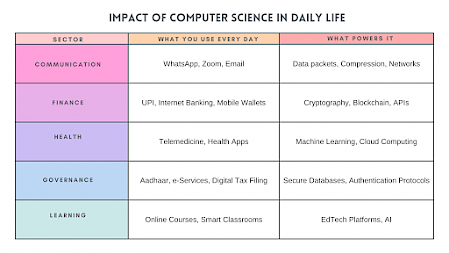
Here’s how Computer Science powers what you see and use every day:
The Next Leap: Where Computer Science Is Headed Now
The world of Computer Science isn’t standing still. It’s racing ahead.
It’s no longer only about solving problems. It’s about modeling thought, predicting behavior, and shaping society.
Key Areas Shaping the Future:
Artificial Intelligence
Smart assistants, fraud detection, and personalized learning all rely on systems that can learn and adapt. AI is no longer niche. It’s mainstream.
Machine Learning
Banks use it to detect fraud. Hospitals use it to catch early signs of disease. YouTube uses it to suggest your next video.
Quantum Computing
Still in early stages, but already rewriting how we think about data speed and security. Great potential in areas like climate modeling and medicine.
Human-Computer Interaction
Typing is being replaced by voice, touch, gesture, and even eye movement. Systems need to understand humans more naturally.
Green Computing
Energy-efficient algorithms and carbon-aware systems are becoming essential. The future must be fast and sustainable.
Data Science
Cities are planned, crops are managed, and pandemics are predicted — all using data. But it’s not just about storage. It’s about making data useful.
Cybersecurity & Ethics
With more access comes more risk. Secure systems and ethical practices are now just as critical as fast systems.
Let’s look at how this changes the role of a Computer Science graduate. They’re no longer writing code in isolation. They’re building systems that must:
- Learn
- Predict
- Protect
- Scale
- Respect privacy
- Save energy and
- Adapt in real-time
This shift needs a new kind of training. That’s why the B.Tech. CSE syllabus has evolved.
It now includes courses that cover not only programming but also AI ethics, neural networks, green computing, and systems design. A comprehensive Computer Science B.Tech. syllabus now trains you not just to code but to think big and to build smart.
Inside the B.Tech. CSE Syllabus: Turning Learners into Innovators
The B.Tech. Computer Science program is designed to move you beyond tasks into thinking. The B.Tech. CSE syllabus now prepares you not just to handle challenges and solve real-world issues, but it also prepares you to lead the next advancements in this technology-oriented era.
B.Tech. Computer Science Core Subjects
- Data Structures
- Discrete Mathematics
- Computer Organization and Architecture
- Object-Oriented Programming
- Operating Systems
- Introduction to Database Systems
- Computer Networks
- Artificial Intelligence
- Design and Analysis of Algorithms
- Optimization Techniques
- Software Engineering and
- Theory of Computation
B.Tech. Computer Science Best Specializations
- Artificial Intelligence and Machine Learning
Elective Subjects
- Natural Language Processing
- Computational Neuroscience
- Image Processing and Its Applications
- Introduction to Logic and Functional Programming
- Introduction to Machine learning
- Computer Vision
- Deep Learning and
- Reinforcement Learning
- Data Science and Big Data Analytics
- Natural Language Processing
- Advanced Data Management Systems
- Foundation of Data Sciences
- Information Retrieval
- Introduction to Machine learning
- Social and Information Networks
- Algorithms for Big Data
- Big Data Analytics
- Data Mining and Warehousing, and
- Virtualization and Cloud Computing
- Cyber Security and Privacy
- Foundation of Information Security
- Applied Cryptography
- Internet of Things
- Performance Modeling and Queuing Theory
- Wireless and Mobile Systems
- Wireless Sensor Networks
- Ethical Hacking
- Security Analytics and
- Secure Coding
Learning Methods That Stick
The best way to learn isn’t always from a book. The B.Tech. Computer Science program blends:
- Live projects with companies
- Hackathons and code jams
- Research work with faculty
- Summer internships at tech firms and
- Peer-to-peer code reviews
This mix helps you go from learning to building and from theory to impact.
From Campus to Code That Changes the World: B.Tech. in Computer Science and Engineering at Shiv Nadar University (Institution of Eminence)
At Shiv Nadar University, we believe that the best engineers aren’t truly brought up in classrooms, but in ecosystems of embracing rigorous academia, interdisciplinary thought, real-world problem solving, and a sense of purpose. And our ethos truly reflects in the B.Tech. in Computer Science and Engineering program offered under the School of Engineering.
Right from the beginning, students enter a framework that supports depth and flexibility. The B.Tech. CSE curriculum engages students in more than just programming languages and algorithms; it is also layered with emerging specializations in AI, Data Science, and Cybersecurity that have been developed with the input of industry partners and academic researchers.
If you’re seeking a B.Tech. Computer Science program that moves with the future, thinks across boundaries, and prepares you to lead with clarity and conscience, Shiv Nadar University offers not just the degree, but the environment to make it count.
Synopsis
A B.Tech. in Computer Science equips you to be the creators of the digital world of tomorrow. The degree prepares you not only to design and build the tools that are integral to our daily lives, but also to engage with challenges in domains such as artificial intelligence, cybersecurity, and cloud computing.
Start your B.Tech. in Computer Science and Engineering journey at Shiv Nadar University. Admissions are open. Gear up and apply now!
FAQs
Is the CSE course future-ready?
Yes. Computer Science powers almost every industry today. From finance to farming, every domain now runs on tech and needs skilled people behind it.
What careers can I pursue after B.Tech. Computer Science?
You can become a software developer, cybersecurity expert, data scientist, AI engineer, cloud architect, or tech policy advisor. The field is vast and growing.
What is the average starting salary after B.Tech. CSE course?
As a CSE graduate, you can expect a starting salary of four to ten lakh rupees in a year.