How an MA in Rural Management Prepares You for India’s Evolving Rural Economy
Blog / June 22, 2026
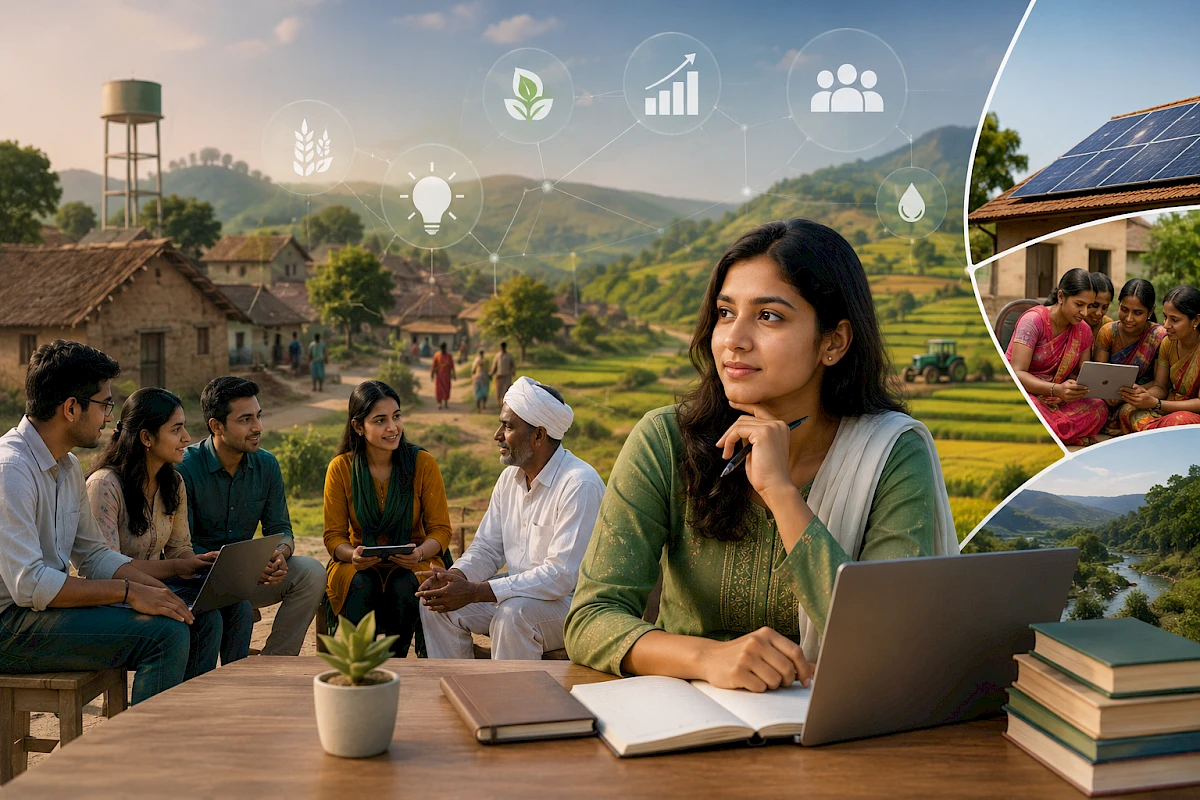
Rural India is changing rapidly. Improved infrastructure has increased access to technology, while government initiatives have supported rural development by creating employment opportunities and improving living standards. Also, the increase in digital connectivity allows for more connections between rural areas and urban areas, thus playing a central role in assisting every provincial area's economy and society.
In this case, rural transformation brings about new tasks and opportunities that require professional guidance and planning in the context of managing these transformations. A master's degree in Rural Management equips professionals with the knowledge and skills needed to drive positive change by planning and implementing socio-economic projects that improve the lives of rural communities.
If you want to build a successful career while making a positive social impact, a career in Rural Management can help you contribute to the development and well-being of people living in rural communities.
MA in Rural Management- Quick Highlights
Aspect | Details |
Course Name | MA in Rural Management |
Duration | 2 Years |
Eligibility | Bachelor's degree from a recognized university |
Focus Areas |
|
Career Opportunities |
|
Key Skills Developed |
|
Employment Sectors |
|
All About Rural Management in Modern India
The rural sector plays a crucial role in a country's growth, creating a growing demand for professionals who understand rural communities, their challenges, and their opportunities. Rural management focuses on improving livelihoods, strengthening local economies, and promoting sustainable development in rural areas.
Rural management combines disciplines including management, economics, social sciences, and public policy to help solve some of the major issues facing the world, such as agriculture, education, health care, financial inclusion and rural entrepreneurship.
Obtaining an MA in Rural Management will allow you to learn more about rural communities and provide you with the necessary skills to participate in rural development initiatives by governmental and non-governmental agencies and other organizations that are involved in grassroots activities.
Why Rural India is Becoming an Economic Growth Engine
Nearly 2/3rd of India’s population resides in rural areas, making them a significant contributor to the country's development. Over the years, rural markets have undergone significant changes due to-
- Improved road & transportation networks
- Government welfare & livelihood programs
- Rising rural entrepreneurship opportunities
- Expansion of rural banking and financial services
- Growth of digital technologies and internet access
- Increased focus on women’s empowerment and self-help groups
What Skills Will You Learn in an MA in Rural Management?
One of the biggest advantages of this program is its multidisciplinary approach. Students study development, management, economics, and social issues, giving them a well-rounded understanding of the challenges faced by rural communities.
1. Leadership & Community Engagement
Successful rural development totally depends on understanding community needs. The course teaches students how to interact with diverse populations, build trust as well as encourage participation in development initiatives.
These skills help professionals to manage projects that directly impact rural communities.
2. Project Planning and Implementation
Development programs often involve a number of stakeholders, budgets, and timelines. Through coursework and field exposure, students learn how to-
- Design development projects
- Conduct need assessments
- Allocate resources efficiently
- Monitor project outcomes
- Evaluate social impact
These skills are valuable in government agencies, NGOs & development organizations.
3. Understanding Rural Economics
A strong understanding of rural markets, livelihoods, and economic systems is essential for sustainable development. An MA in Rural Management helps students analyze-
- Agricultural value chains
- Rural employment trends
- Microfinance systems
- Cooperative models
- Market development strategies
This knowledge enables professionals to create solutions that improve economic opportunities for rural populations.
4. Policy Analysis and Development
Government policies significantly influence rural growth. Students learn how to evaluate existing programs, identify gaps, and recommend improvements.
This expertise becomes particularly valuable when working with public sector organizations and policy-driven development projects.
5. Research and Data-Driven Decision Making
Modern development initiatives increasingly rely on data for planning and evaluation.
The program develops skills in-
- Field research
- Data collection
- Survey design
- Impact assessment
- Report writing
These competencies help professionals make informed decisions and improve project effectiveness.
Practical Exposure- Learning Beyond the Classroom
A key advantage of pursuing an MA in Rural Management is the emphasis on practical learning.
Students often participate in-
- Village immersion programs
- Field visits
- Rural development projects
- Internships with NGOs and government bodies
- Community-based research studies
This hands-on experience provides a realistic understanding of rural challenges and strengthens problem-solving abilities.
By the time students graduate, they are equipped not only with theoretical knowledge but also with valuable field experience.
Career Opportunities after an MA in Rural Management
As India's rural economy continues to evolve, career opportunities in this field are expanding across multiple sectors.
1. Government Sector- Graduates can work on rural development initiatives related to-
- Livelihood generation
- Skill development
- Rural infrastructure
- Agricultural support programs
- Community welfare projects
2. Non-Governmental Organizations (NGOs)- These organizations have a requirement for professionals who can plan, coordinate, and assess development activities related to education, health, livelihoods, and inclusivity.
3. Corporate Social Responsibility (CSR)- There are many organizations that contribute heavily towards rural development through their corporate social responsibility (CSR) activities. Here comes the necessity for rural management professionals to be involved.
4. Development Consulting- Consulting firms working on social impact and development projects often hire rural management graduates for research, strategy, and implementation support.
5. Social Enterprises- The rise of social entrepreneurship has created opportunities for graduates to launch innovative ventures that address rural challenges while generating sustainable income.
Why This Degree is Relevant for the Future
The future growth of India depends on developing its rural regions. There is immense scope in sustainability in agriculture, climatic adaptation, digital connectivity, and entrepreneurship in rural India. To capitalize on such opportunities, there is a requirement for experts who can combine management principles and rural understanding.
An MA in Rural Management helps students develop the skills and mindset needed to address rural challenges and create a positive impact. What makes this course valuable is that it prepares graduates to bring meaningful change to communities and contribute to India's overall development.
Why Shiv Nadar University (Institution of Eminence) Could Be the Right Place to Begin Your Rural Management Journey
Choosing the right university matters just as much as choosing the right course, and this is where Shiv Nadar University stands out. Its MA in Rural Management is not built like a traditional classroom-heavy program. Instead, it blends academic learning with real-world field exposure, helping students understand rural India beyond theories and case studies. The program is designed for students who want to work closely with communities, solve real development challenges and become socially conscious leaders to create long-term impact.
What Makes Shiv Nadar University Different?
- Unique multidisciplinary program addressing rural India's challenges
- Two semesters of field education and internships with rural practitioners
- Studio and classroom learning emphasizing critical thinking and problem-solving
- Focus areas include climate change, agriculture, women's institutions, health, and education
- Ongoing mentorship support throughout and after the program
- Emphasis on empathy, communication, and value-based leadership
- Curriculum developed with input from NGOs, CSR organizations, and governmental bodies
- Industry-relevant training for impactful careers from the start
Conclusion
The rural economy in India is witnessing an unprecedented transformation that goes beyond the conventional industries. With the increasing levels of connectivity in villages and an overall focus on development, the demand for competent professionals remains high.
An MA in Rural Management equips graduates to tackle challenges in rural settings, such as resource management, poverty reduction, and community empowerment, through applied management principles, and sustainable practices. If you want to work with government agencies, NGOs, CSR teams, or social enterprises, this course can be a great career choice.
FAQs
Q1. What is the duration of an MA in Rural Management?
An MA in Rural Management is typically a two-year postgraduate program combining classroom learning with practical field exposure.
Q2. Who can apply for an MA in Rural Management?
Graduates from any recognized university can apply, depending on the eligibility criteria specified by the institution.
Q3. What career opportunities are available after completing this course?
Graduates can work in NGOs, government agencies, CSR departments, development consulting firms, and social enterprises.
Q4. Why is Rural Management becoming an important career field in India?
Rapid rural development, digital growth, and policy initiatives have increased demand for skilled rural management professionals nationwide.