Number 20
HIMALAYAS PLUS
MAY-JUNE 2026
Dear All,
Greetings from the Centre of Excellence for Himalayan Studies (CHS), Shiv Nadar Institution of Eminence. We are pleased to present the 20th edition of our Newsletter, covering the months of May and June 2026. Previous editions of HIMALAYAS PLUS can be accessed on our website.
PUBLICATIONS
The Centre’s research output over the past two months spanned book chapters, journal articles, policy papers, Issue Briefs and Commentaries, including contributions under CHS’ “On China” series with The Tribune.
CHS Director, Jabin T. Jacob contributed a chapter on the new dynamics of competition in India–China relations to the Strategic Year Book 2026, published by the United Service Institution of India, New Delhi. Writing in Global Asia, the journal of the East Asia Foundation, he examines how China increasingly deploys narrative-building and discourse power as instruments of statecraft, seeking to push a global perception of American decline.
Kalzang Dorjee Bhutia, CHS Non-Resident Senior Fellow, published an article in Edge Effects, an online journal dedicated to environmental justice, on the many ways of knowing ferns in the Sikkim Himalayas, and how such plural knowledge can help decolonise human–plant relationships.
Five Issue Briefs were published by the Centre during this period.
Shih-Ting Lin, Mandarin Language Teacher, Department of International Relations and Governance Studies, compared a CHS article with its translation in China to demonstrate how translation can serve as a vehicle of political messaging rather than a neutral transfer of meaning. She highlights subtle shifts in tone and terminology constructing a narrative of a constrained India and a stronger China. The original essay by CHS Fellow, Anand P. Krishnan in India’s World, which examined how Indian nationals remain excluded from senior leadership of Chinese firms in India and how India’s structural weaknesses limit New Delhi’s ability to influence their conduct, was translated into more accurate Chinese.
Muzaffar Hussain, Assistant Professor, Department of Political Science, Maulana Azad National Urdu University, Hyderabad, assesses the administrative rationale behind the creation of new districts in Ladakh and its implications for governance, representation, and the region’s statehood and Sixth Schedule demands.
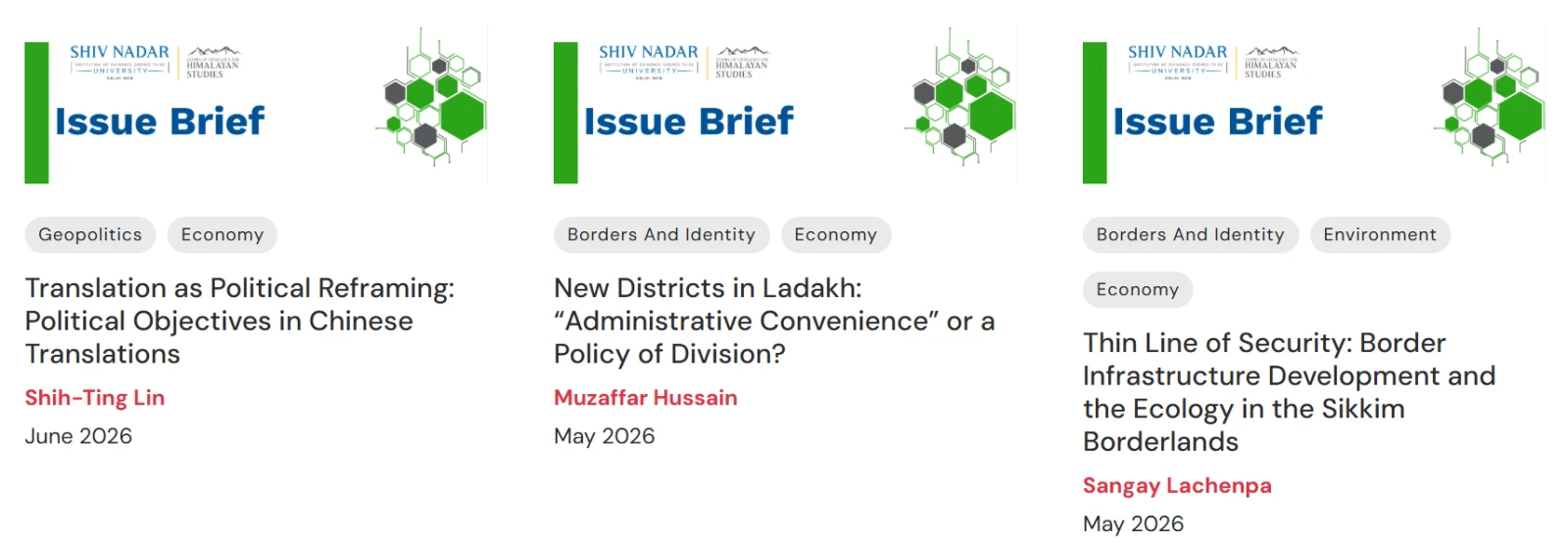
Sangay Lachenpa, former CHS Post-Doctoral Fellow and Guest Faculty, Department of International Relations, Sikkim University, in his Issue Brief, asks whether national security and ecological security can coexist in the fragile high-altitude borderlands of Sikkim, examining how border infrastructure and ecology intersect in the sensitive Tso Lhamo region, and offers several suggestions for reconciling the two imperatives. In a Commentary, he also examines how political instability in South Asia is driving stricter surveillance in the Sikkim Himalayas.
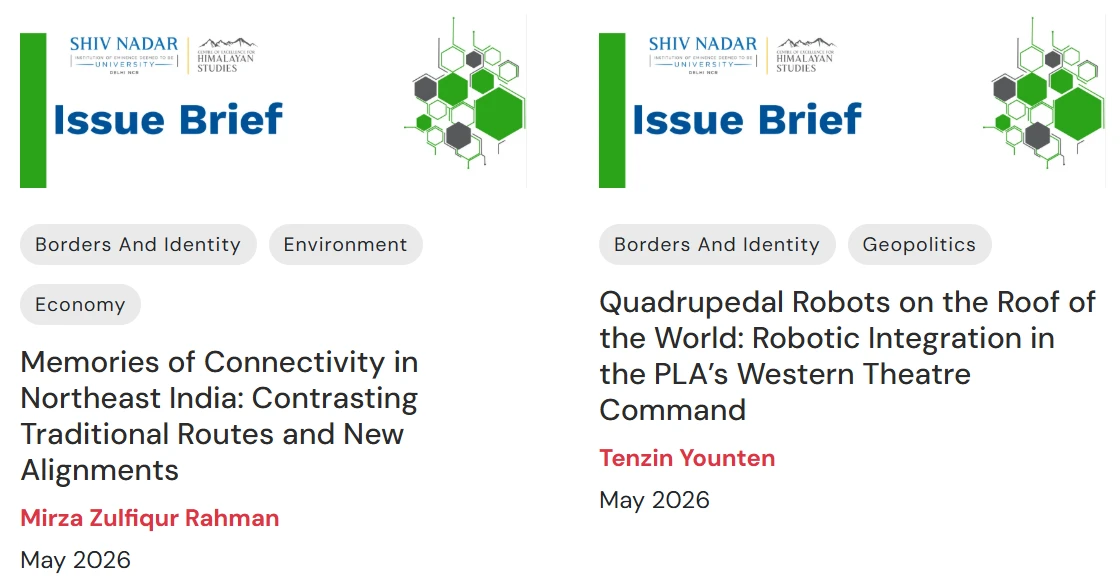
Tenzin Younten, a researcher specialising in China’s defence and security and India–China relations, examines China’s integration of armed quadrupedal robots across the PLA’s Western Theatre Command and its implications for India’s Himalayan defence posture.
In his Issue Brief, Mirza Zulfiqur Rahman, Visiting Associate Fellow, Institute of Chinese Studies, Delhi, examines how contemporary connectivity projects in Northeast India interact with older memories of connectivity, traditional routes and borderland notions of mobility and belonging.
The Centre’s partnership with the national daily, The Tribune under the “On China” series saw contributions from several CHS faculty during this period. Following the creation of Cenling County, Jacob and co-author Devendra Kumar, CHS Associate Fellow, examined the long-term challenges China’s administrative changes in Aksai Chin poses for India. CHS Fellow, Krishnan made the case for building India’s domestic battery manufacturing capacity to reduce dependence on China, while Kaveri Gill, CHS Non-Resident Senior Fellow, wrote on the soft power of Buddha’s relics of Piprahwa travelling to Ladakh after 76 years.
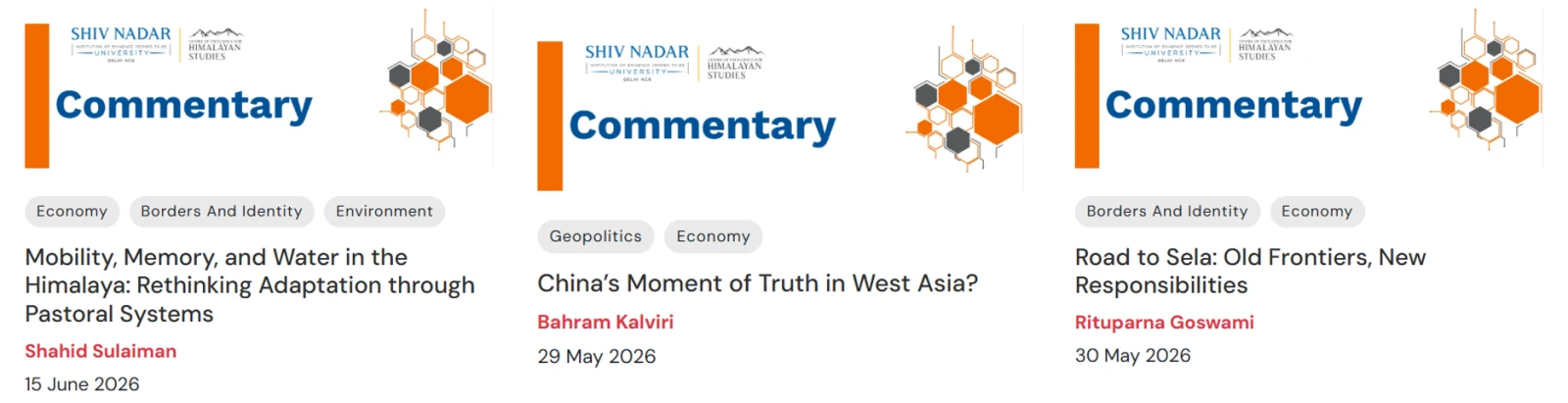
The Centre also published several Commentaries by external scholars. Bahram Kalviri, PhD Scholar, University of Hyderabad, asks whether Beijing can continue to benefit from stability in West Asia without assuming responsibility for maintaining it, with a fragile Iran likely presenting China’s moment of truth and testing the limits of its strategic free-riding. Pointing out how new infrastructure and rising tourist footfall are driving the transformation of Sela Pass in Arunachal Pradesh, Rituparna Goswami, PhD Scholar, Centre for Historical Studies, Jawaharlal Nehru University, reflects on the challenge of balancing development, security, tourism and community interests in a strategic border region. Amrita Saikia, Assistant Professor, Woxsen University, Hyderabad, analyses the dilemmas of local solidarity versus national security posed by the forcibly displaced Chin from Myanmar in Mizoram.
In another Commentary, Shahid Sulaiman, founder of the Himalayan Pastoral Trust, Kashmir, shows how pastoral communities in the western Himalaya are responding to a growing water crisis through mobility, ecological memory and stewardship, arguing that transhumant communities are both among the most vulnerable to climate change and among its first responders.
IN THE MEDIA
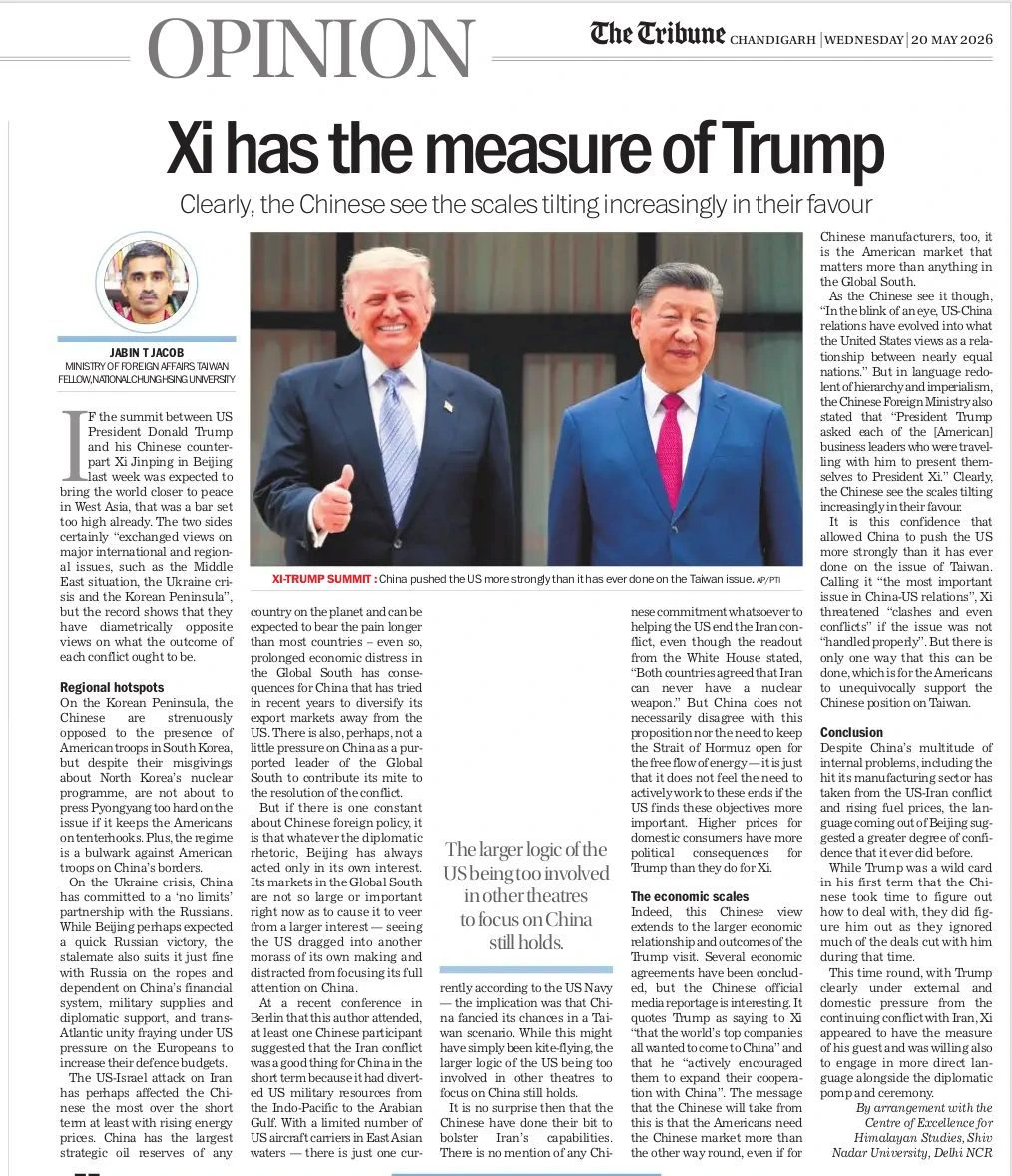
As US President Donald Trump undertook his first state visit to China in his second term, Jabin T. Jacob published a series of commentaries examining the visit, its implications for US–China relations, and Beijing’s evolving approach to diplomacy. In the Deccan Herald, he analysed how China used diplomatic narratives to project parity with the United States and shape perceptions of global leadership. In another piece, he took a closer look at Beijing’s growing confidence and the strategic calculations underpinning its dealings with Washington. And in The Tribune, he argued that Beijing entered the summit with an increasing clarity of purpose, situating the engagement in the wider context of Iran, Taiwan, trade and great-power competition. Writing in the Hindustan Times, he reflected on the big power diplomacy on display in Beijing. He was also quoted in the South China Morning Post decoding the politics of Beijing’s portrayal of India as an elephant in its animal analogies.
CHS Distinguished Fellow, Claude Arpi wrote two pieces in Firstpost: one arguing that China’s state-controlled version of the faith means it can never credibly lead the Buddhist world, and another, on the Indian ambassador Vikram Doraiswami’s visit to Lhasa, reflecting on why Tibet continues to matter for India. In the Asian Age, he recounts Biju Patnaik’s role in offering Charbatia in Odisha as a base for the CIA’s U-2 reconnaissance flights over Tibet and China in the 1960s, and the airfield’s later part in India’s covert support to Tibetan forces.
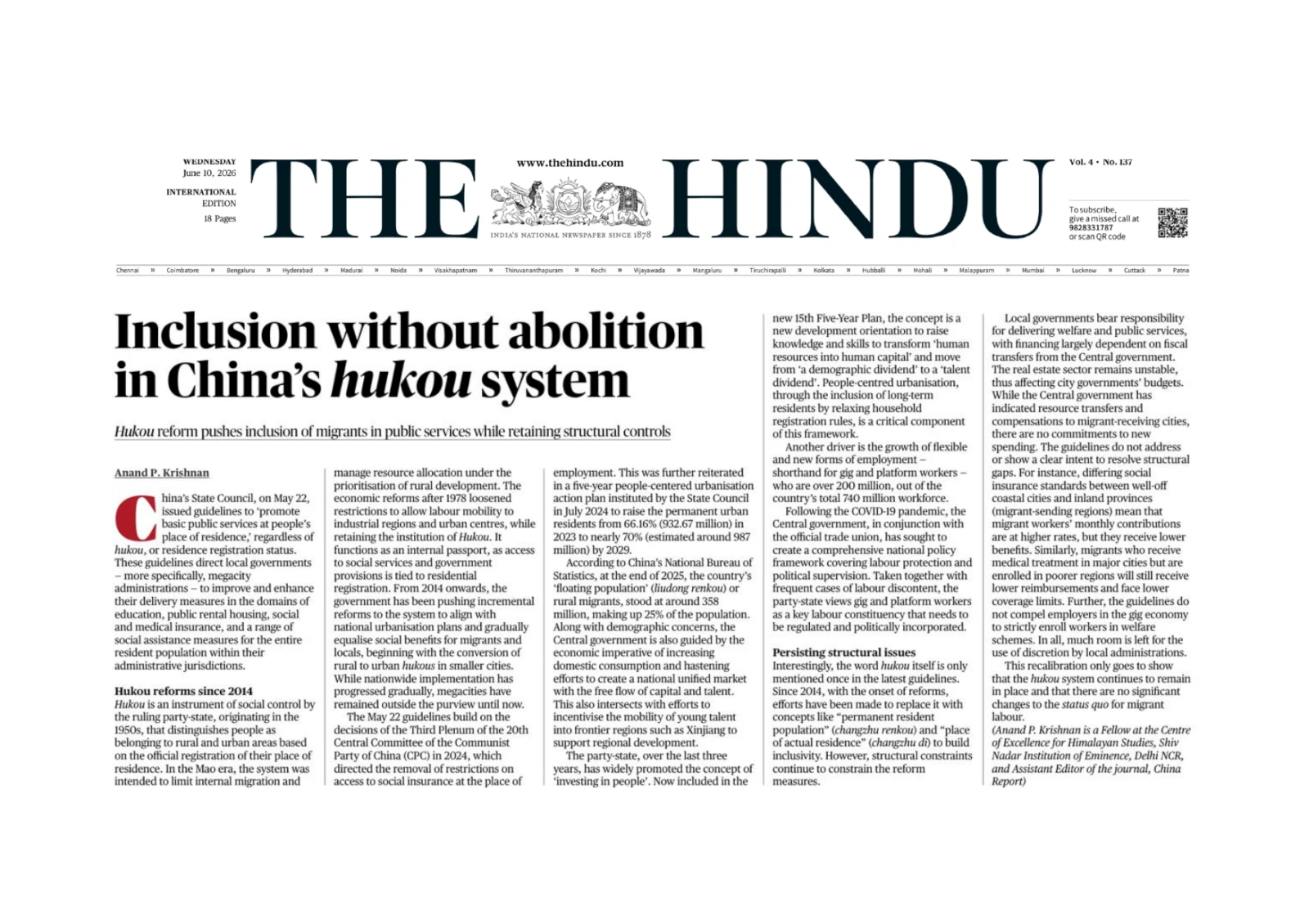
Anand P. Krishnan wrote in The Hindu on China’s new State Council guidelines expanding access to public services for rural migrants in its megacities, which push towards urban inclusion while stopping short of dismantling the hukou household registration system. He was also quoted in a Firstpost report on Trump’s Beijing visit and China’s calculus on Iran.
Kaveri Gill wrote in The Wire arguing that China’s warning to India over the Dalai Lama’s reincarnation reveals a curiously insecure great power, with Beijing’s hardline policies in Tibet reflecting deep internal anxieties over the region’s spiritual and political future.
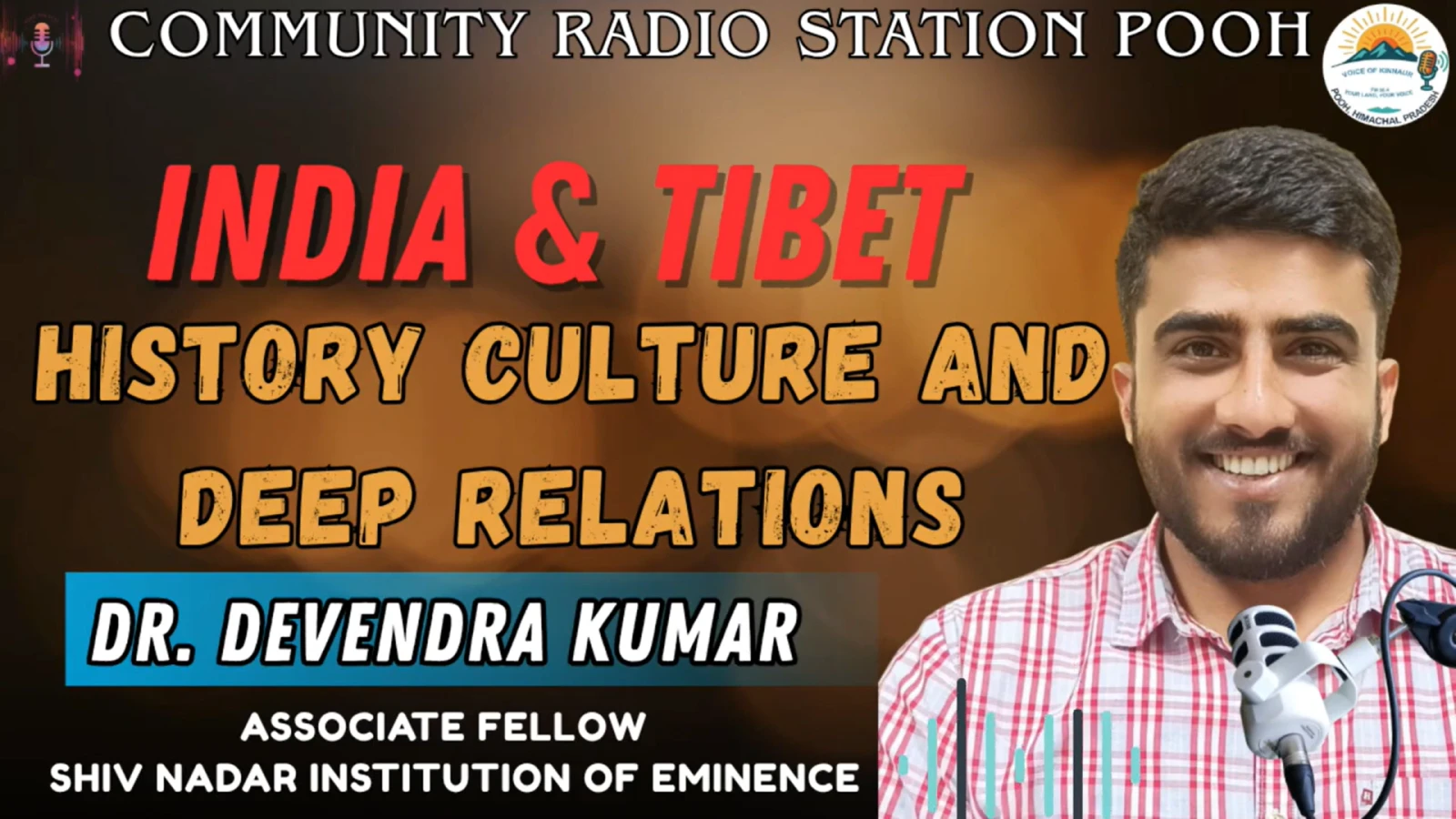
Devendra Kumar joined a podcast on the community radio station Voice of Kinnaur, discussing the historical, cultural and civilisational ties between India and Tibet, the role of Himalayan trade routes and monasteries in shaping these exchanges, and the importance of engaging local youth in preserving Himalayan cultural heritage.
FACULTY UPDATES
Jabin T. Jacob delivered a lecture on the view from Beijing on US–China relations at the Central Department of International Relations and Diplomacy, Tribhuvan University, Kathmandu, on 17 June. Earlier, on 12 May, he was a panelist at a closed-door expert workshop on China, India and the EU in the global order, organised by the Friedrich-Ebert-Stiftung in Berlin, where he spoke on how China–India relations shape global order. At the Bodhi Sambad conference on decoding China’s geopolitics in South Asia, organised by the Centre for Social Innovation and Foreign Policy in Kathmandu on 19 June, he spoke on the geopolitics of heritage covering Buddhism, education and public diplomacy, and moderated a session on regionalism and collective engagement in South Asia.
Claude Arpi participated in a panel discussion on traditional and non-traditional security issues related to Tibet, organised by the Indian Council of World Affairs at Sapru House, New Delhi, on 16 June.
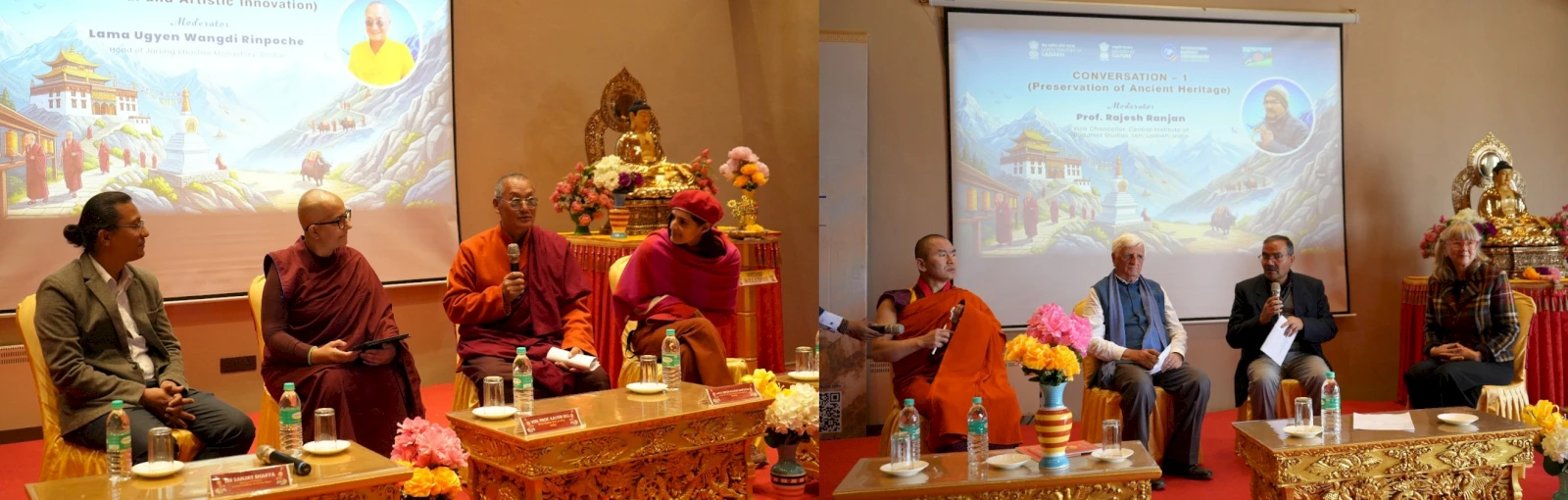
Kaveri Gill was invited by the Union Territory of Ladakh Government, the Ministry of Culture, Government of India, and the International Buddhist Confederation to the public veneration of the Buddha’s Relics of Piprahwa in Leh in May. She also spoke at an international conference on the contribution of Himalayan Buddhism to the spiritual and cultural heritage of India and beyond at Mahabodhi International Yoga and Meditation Centre, Leh, on 3 May. Arpi was also a panelist at the same conference. On 30 May, at a Tibet House, New Delhi conference on rescuing ecology through universal compassion, she spoke on the Dalai Lama’s case for non-violence and compassion
Anand P. Krishnan participated in a Residential Capacity Building Programme on India’s industrial transformation, organised by the Institute for the Study of Industrial Development and the Indian Council of Social Science Research in New Delhi from 4 to 16 May, where he also presented his research on the dominance of Chinese smartphone companies in the Indian market.
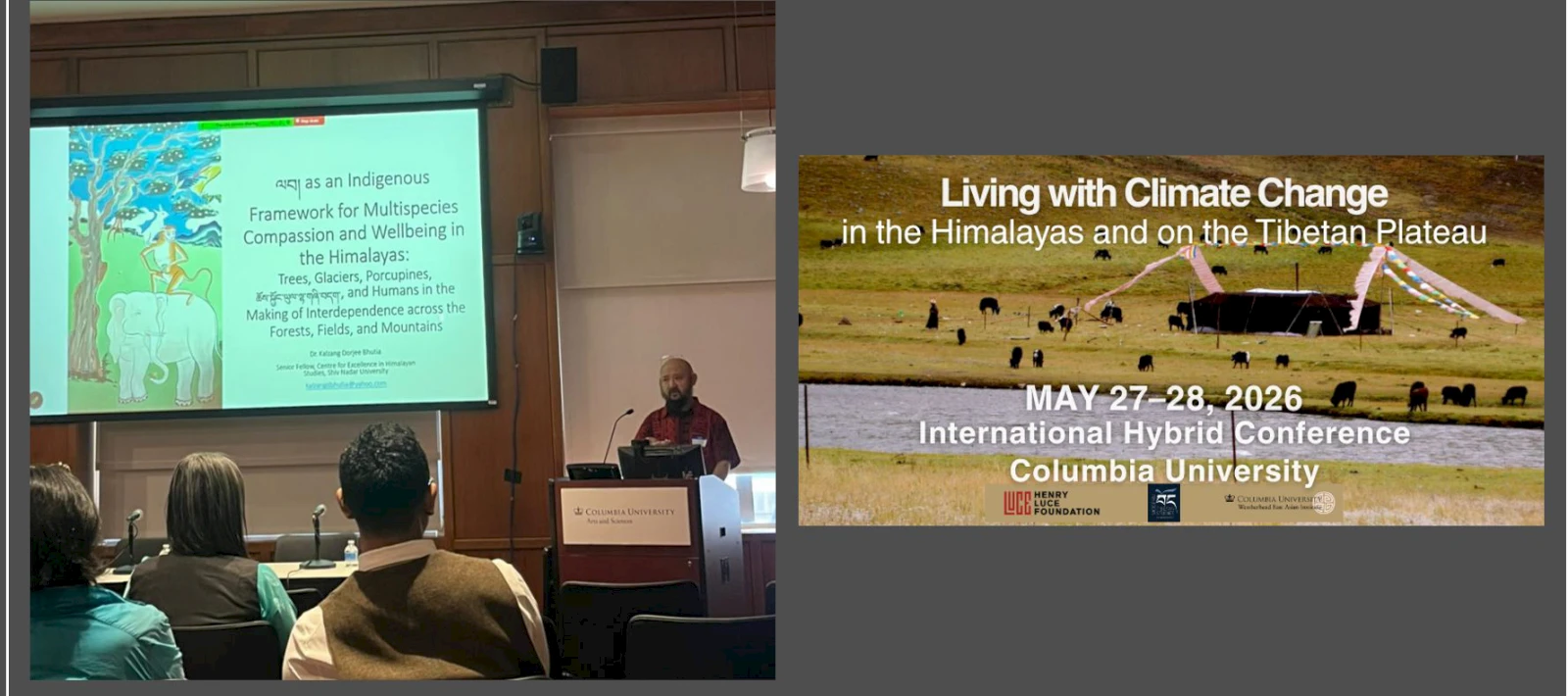
Kalzang Dorjee Bhutia delivered the keynote speech at the conference on climate change on the Tibetan Plateau and in the Himalayas, held at Columbia University, New York, on 27–28 May. His keynote explored lap as an indigenous framework for multispecies well-being and compassion in the Himalayas, critically examining how local communities in western Sikkim are adapting to climate-induced challenges through the lens of multispecies relationships.
You can stay updated with our publications, events, and activities through our website, X (@Himalayas_SNU), Facebook, LinkedIn and Instagram. You can also find previous Newsletters on our website.
Share this: