
Road to Sela: Old Frontiers, New Responsibilities
In his account, Himalayan Blunder, based on the 1962 Sino-Indian war, Brigadier J.P. Dalvi described the road to Sela via Dirang as ‘impassable’ and ‘barely fit for a jeep’. For much of the post-Independence period, the Sela pass and its surrounding landscapes were defined by seasonal inaccessibility, limited state presence and the burden of the 1962 India-China confrontations.
Today, infrastructure developments are reshaping not only access to these volatile spaces, but also how they are recalled in popular narratives. A recent journey to these once perilous frontiers draws a stark contrast to earlier imaginings of the Sela Pass.
From Frontier to Connectivity
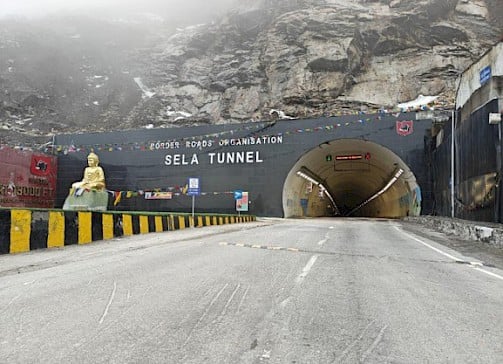
The inauguration of the Sela Tunnel in March 2024 marks one of the most crucial moments in the histories of Arunachal Pradesh and India’s border security policies. The project, executed by the Border Roads Organization (BRO), consists of two tunnels constructed at an altitude of over 13,000 ft. The main tunnel is approximately 1,555 metres and the other tunnel is 980 metres long. The government noted three advantages of the tunnel: providing all-weather connectivity to Tawang; reducing more than one hour travel time between Tezpur and Tawang; and easing travellers’ journey to the Sela pass.
The scale of infrastructural development in recent years must be situated within a broader geopolitical context. Over the past few years, China has raised the volume on its territorial claims. The hyper-visibility of the Indian state in the Eastern Himalayan frontier is a direct response to China’s policies including the xiaokang (well-off) villages strategy and the renaming of places in Arunachal Pradesh to lay territorial claims. As a result, the BRO which has operated in the region since 1960, has seen a marked increase in project scale and pace since 2017. These developments have also led to a shift in the governance of the frontier.
For a traveller in 2026, the road to the Sela pass is no longer defined by uncertainty. It is well-paved with vibrant road signs marked by the BRO’s distinctive witty warnings to promote road safety. The apprehensions of this Himalayan frontier region and the traumatic memories of 1962 appear to be gradually receding as tourism footfalls hit an all-time high.
The Sela Tunnel inaugurated in 2024
Source: Author
These recent transformations represent a new age in the history of Indian frontiers. However, they also raise an important question: is the mighty frontier losing its ‘frontier-ness’ by becoming more accessible due to the hyper-visibility of the central government and increasing inflow of tourists? Recent events and some personal observations from a field visit suggest that opening the frontier comes with its own risks and there is a need to address these challenges.
A Call for Responsible Tourism
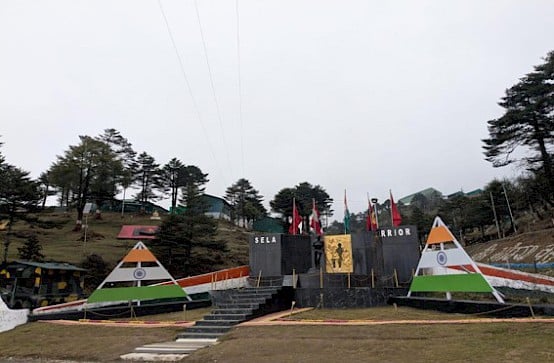
A January 2026 incident in which two persons drowned in a lake in the region is a grim reminder that tourism in difficult terrain comes with major responsibilities and the need for caution. Better connectivity does not eliminate challenges of climate and ecology. Despite the presence of safety signage, tourist behaviour often remains careless and non-compliant with local regulations. At the military outpost of Baisakhi, situated en route to the Sela Tunnel, tourists make a routine stop for refreshments and a brief break from the long journey. Two contrasting signs catch the attention. One is a signboard with the words "Restricted photography zone due to security concerns". The other is of the tourists posing next to it. This casual disregard for regulations highlights a significant gap in tourist behaviour in sensitive border spaces.
Baisakhi base camp, en route to Sela
Source: Author
Security issues also surround the recent transition to a digital Inner Line Permit system (ILP). The e-ILP portal remains only partially functional and so tourists continue to go through the manual border checks and verification at various points like Bhalukpong, Balemu and so on. A telephonic conversation with the e-ILP authorities, after facing personal issues with the system, hinted that portal lapses and issues of payment and verification have been common since the transition was initiated in 2022. As tourist numbers continue to increase, there is a need to make the online system efficient at the earliest to prevent unauthorized tourist entry and offer a check against expired permits.
Prospects for Development
The transformation of this Himalayan frontier by infrastructures like the Sela Tunnel is not without its benefits. Greater connectivity promised by better roads and digital infrastructure is a step towards the development of the region as a whole. The monumental Sela Tunnel serves as a powerful symbol of the Centre’s ambitions in border security; it has significantly reduced the time and dangers of travel, making space for various kinds of vehicles. Field observations further indicate the growing presence of adventurous bikers and tourists from various parts of the country.
The opening of Sela Tunnel as a tourist destination also signals a transition in the hospitality sector. Local Monpa communities, who host a significant share of tourists, earlier depended on unreliable patterns of tourism; unsteady seasonal tourism meant also that prices were high for food and accommodation as they had to make up for the losses incurred during the off-season. Although extreme weather conditions like landslides and snowfall will continue to affect accessibility to some extent, increasing tourist numbers during peak seasons will create more livelihood opportunities. A casual interaction with a homestay owner in Dirang hinted at the general optimism towards these new developments.
The hospitality sector is also expanding to make room for bigger projects. This includes the recent announcement of a Gateway Hotel in Dirang by the Indian Hotels Company Limited (IHCL), focusing on sustainable tourism and ‘eco conscious’ travellers. This initiative is expected to provide a major boost to tourism infrastructure and local culture. However, it also risks placing community-owned homestays in a precarious position. Without careful regulations, such shifts risk reproducing a familiar trajectory in which infrastructure-driven growth sidelines local stakeholders.
More than 60 years have passed since Brigadier Dalvi wrote of his difficult journey to Sela. The frontier today has assumed new meanings with a push for development and greater connectivity. However, accessibility to this strategic space comes with responsibilities on the part of both tourists and institutional authorities. If the earlier challenge was one of reaching the frontier, the current ones will be of addressing the concerns of tourist behaviour, security and equitable development.
About the Author: Rituparna Goswami is a PhD Scholar at the Centre for Historical Studies, Jawaharlal Nehru University.