
 Read this in:
Life in the Aryan Valley: A Personal Reflection
About the writer: Tashi Gurmat, a 21-year-old student at Delhi University, hails from Darchik village in Kargil district, Union Territory of Ladakh.
Series Editors: Kaveri Gill, Non-Resident Senior Fellow, and Dr Jabin T Jacob, Director, Centre of Excellence for Himalayan Studies
Darchik is just a regular village name for any outsider, but for me it is a place where a part of my heart lives. Every morning starts with juniper fumes, whose smell wakes the whole house. Darchik is an old village in the Aryan Valley, and its history dates back many centuries. Like most villages in this region, its past is remembered through oral traditions, rather than written records.
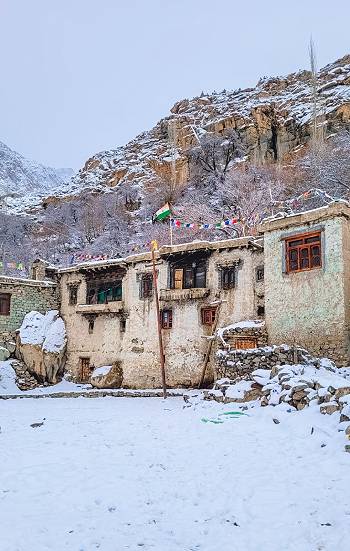
The Aryan Valley, settled in the mountains along the Indus River, makes this place even more beautiful. Life in the valley moves with the weather. In summer, everything turns green; apricot trees grow along the river, which flows heavy with mud, and birds chatter in the trees. People wake before the sun rises and sleep after it sets. Barley is the main crop grown here, and most of the summer is spent storing food for the long winter.
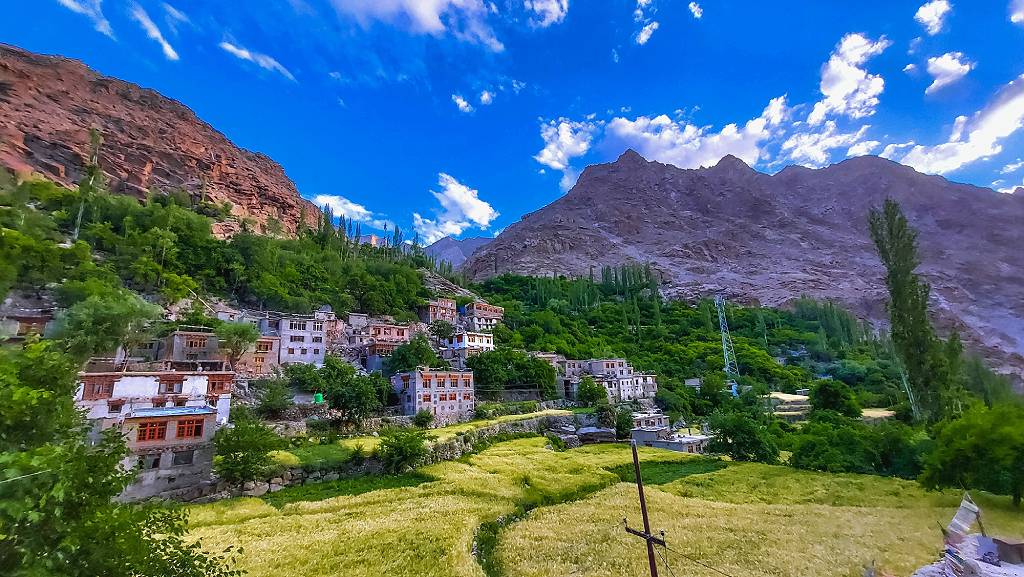
Winter are harsh in Himalaya as well in the Aryan Valley, especially in Darchik, where the sun appears for only about an hour or two each day. There is one spot where villagers gather to catch sunlight, as all other sides are surrounded by snow-covered mountains. Winter is also a time of rest, when people live on what they have earned during the summer.
The cultural life here feels heavenly and closely connected to nature. Both men and women wear flowers on their hats, especially Montho, a large red flower that is an important part of our culture. The Aryan Valley is unique within Ladakh. Although Buddhism is the main religion today, it is not as old here compared to other Buddhist regions of Ladakh.
As I have heard from the elders, prior to Buddhism, the people here believed in nature gods, such as the sun, rocks, and trees. Even today, some of these animist rituals still exist and are now closely connected with Buddhism.
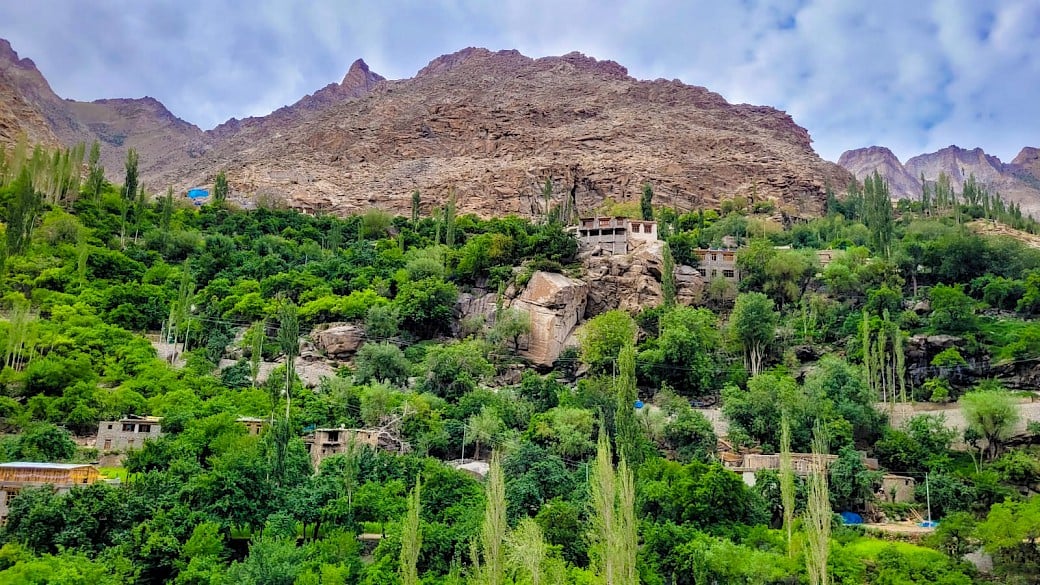
In the past, people in this valley usually married within the valley to protect their lineage. However, this is slowly changing. Cultural mixing is now becoming visible. For example, my mother is from a different region, while my father is from the Aryan Valley, and there are many similar cases today. These changes are also slowly leading towards the possible disappearance of this tribe someday.
The people of this valley have their own language, called Brok-skat, which is spoken by almost everyone in the Aryan Valley. However, in Hanu village, people mostly speak the Ladakhi language. This shows that the language is also slowly vanishing. Brok-skat is becoming increasingly mixed with Ladakhi, Hindi, and English, and the pure form of the language is gradually disappearing.
People in this valley are often described as having lighter features, such as blue eyes and strong physical builds, which some outsiders compare to European features. Because of this, many try to link the Aryan Valley to the army of Alexander the Great, claiming that some of his soldiers settled here while returning to Europe. Many outsiders believe this story, and even within the valley it is sometimes repeated.
In recent times, this narrative has led to uncomfortable and misleading attention. There have been a few isolated cases where European women visited the valley influenced by this belief, and because of such stories, some tourists have wrongly labelled these villages as sites of “pregnancy tourism”. This label is deeply hurtful and unfair. It reduces a living culture to a rumour and ignores the real history, values, and dignity of the people. For someone from this valley, it is painful to see how such stories overshadow the true culture, real people, and lived history of the Aryan Valley.
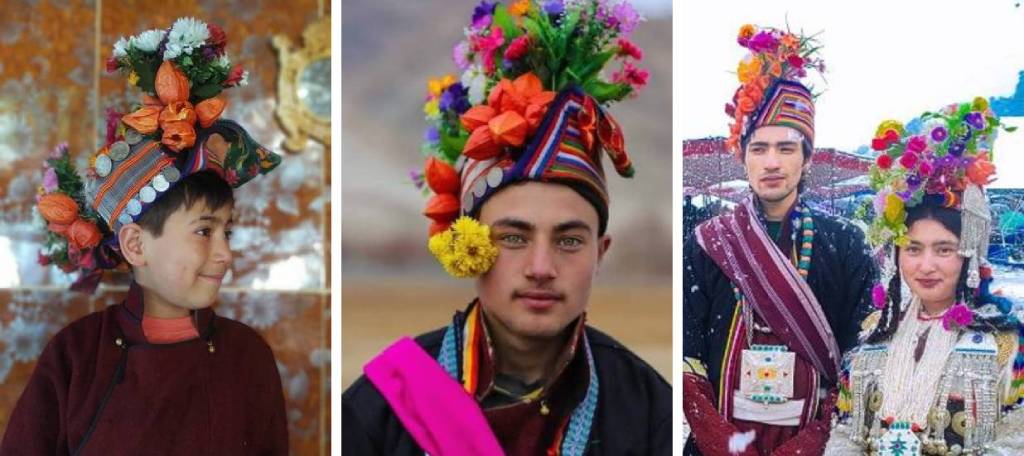
The Aryan Valley, especially Darchik, is also facing a serious water crisis. The amount of water that once flowed through the valley has now reduced to almost one third. This has led to increasing dryness, and much agricultural land is slowly dying. Many people have been forced to leave their fields because of this. At the same time, sudden floods have also become more common during the summer months, making life even more uncertain.
Life for young people in the Aryan Valley is often difficult, especially when there is no clear direction or support. In many villages, schools exist only up to class eight, and children have to travel long distances to continue their studies. Along with education, they are also expected to help with fieldwork and household responsibilities. Because of this pressure, many students eventually give up on schooling.
With limited opportunities and much free time, some youth become attracted to harmful habits such as tobacco, especially coolip, and in some cases even drugs. There are also very few spaces for recreation. Most villages do not have proper playgrounds, and the only open ground is often far from the village. As a result, young people are left with very few healthy ways to spend their time, and many simply begin to ignore these problems.
People from the Aryan Valley also face discrimination within the Ladakh region itself. They are often criticised and labelled using words like “Hanu-pa”, which are used in a negative way to suggest backwardness or lack of intelligence. Such words are deeply hurtful and create a sense of exclusion. Because of this, many young people from the valley feel uncomfortable interacting with other youths in the region and slowly withdraw from wider social spaces.
As someone who belongs to this valley, I want to see my culture with pride, not shame. I want to be proud of who we are and where we come from. By writing and speaking about the Aryan Valley, I hope to influence others to understand our culture better and to stop looking at it with prejudice or mockery.
Read this in: